
The Indian Premier League (IPL) 2025 delivered a thrilling encounter on April 3, 2025, at Bengaluru’s M Chinnaswamy Stadium, where Royal Challengers Bengaluru (RCB) edged out Chennai Super Kings (CSK) by a mere 2 runs in a high-stakes chase. RCB posted 213/5, powered by Virat Kohli’s 62 off 33 balls, Jacob Bethell’s 55 off 33, and Romario Shepherd’s explosive 53* off 14, including 4 fours and 6 sixes. CSK responded with a valiant effort, led by Ayush Mhatre’s 94 off 48 and Ravindra Jadeja’s unbeaten 77 off 45, forming a 114-run third-wicket partnership. However, their chase ended at 211/5, falling agonizingly short.
While the match showcased top-tier cricketing action, it was overshadowed by two controversial umpiring decisions involving CSK’s Dewald Brevis and Shivam Dube. These incidents sparked heated debates, with fans, players, and analysts questioning the fairness of the decisions and the systems governing them.
The Dewald Brevis DRS Controversy
What Happened?
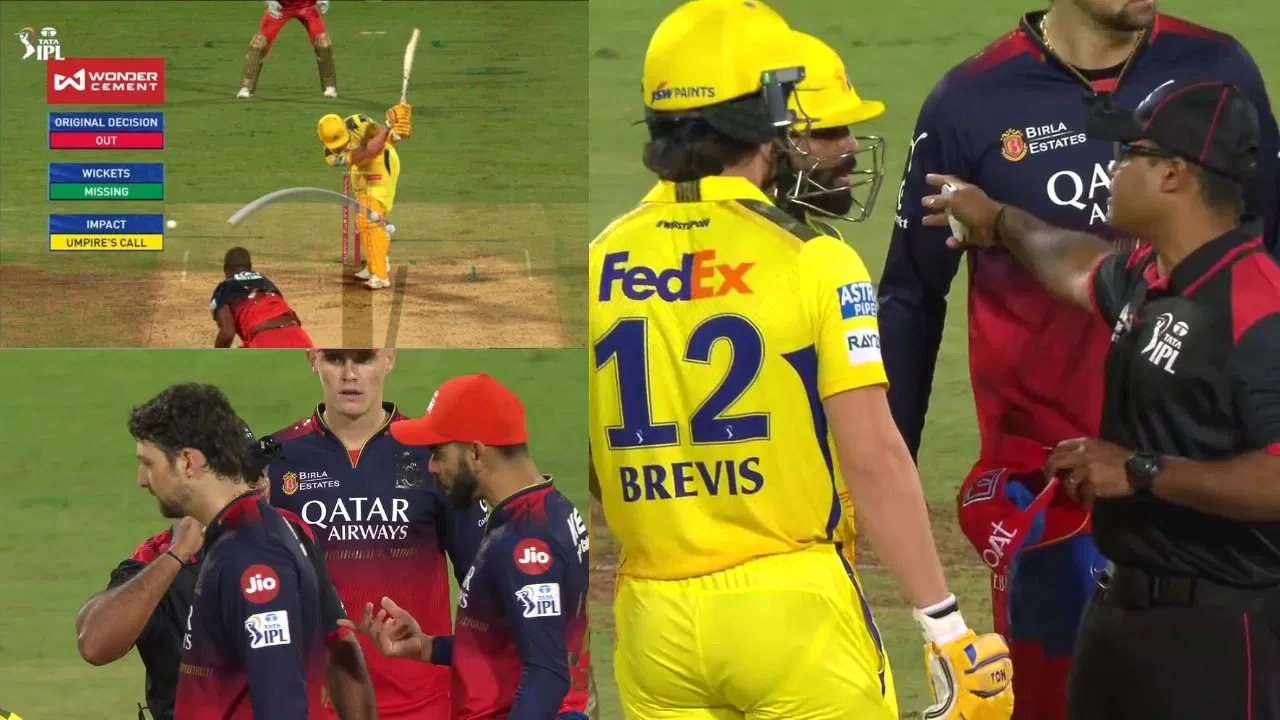
In the 17th over of CSK’s innings, young batter Dewald Brevis faced his first delivery from RCB’s Lungi Ngidi. The full toss struck Dewald Brevis on the pads, and the on-field umpire promptly raised his finger, adjudging him out LBW. Replays later revealed a critical error: the ball would have missed the leg stump, meaning Brevis was not out.
The controversy stemmed from the Decision Review System (DRS) protocol. IPL rules mandate that a batsman must signal for a review within 15 seconds of the umpire’s decision. Dewald Brevis, possibly in shock or confusion, took a few steps toward the pavilion before consulting with non-striker Ravindra Jadeja. By the time they signaled for a review, the 15-second timer had expired, rendering the review null and void. As a result, Dewald Brevis was dismissed for a golden duck, a significant blow to CSK’s chase at a pivotal moment.
Reactions and Fallout
Ravindra Jadeja, CSK’s stand-in captain, was visibly frustrated and engaged in a heated discussion with the umpires, arguing that the DRS timer should have been displayed on the stadium screen to aid the players’ decision-making. Jadeja’s animated exchange, highlighting the team’s belief that the lack of a visible timer contributed to the injustice. Despite the protests, the decision stood, leaving CSK to regroup without one of their key batsmen.
The incident sparked widespread discussion on social media and among cricket pundits. Many argued that the strict 15-second rule, while designed to maintain game flow, can lead to unfair outcomes, especially when players are caught off-guard by an unexpected call. The absence of a visible timer was a particular point of contention, as it could have prompted Brevis to act faster.
Shivam Dube’s Waist-High No-Ball
What Happened?
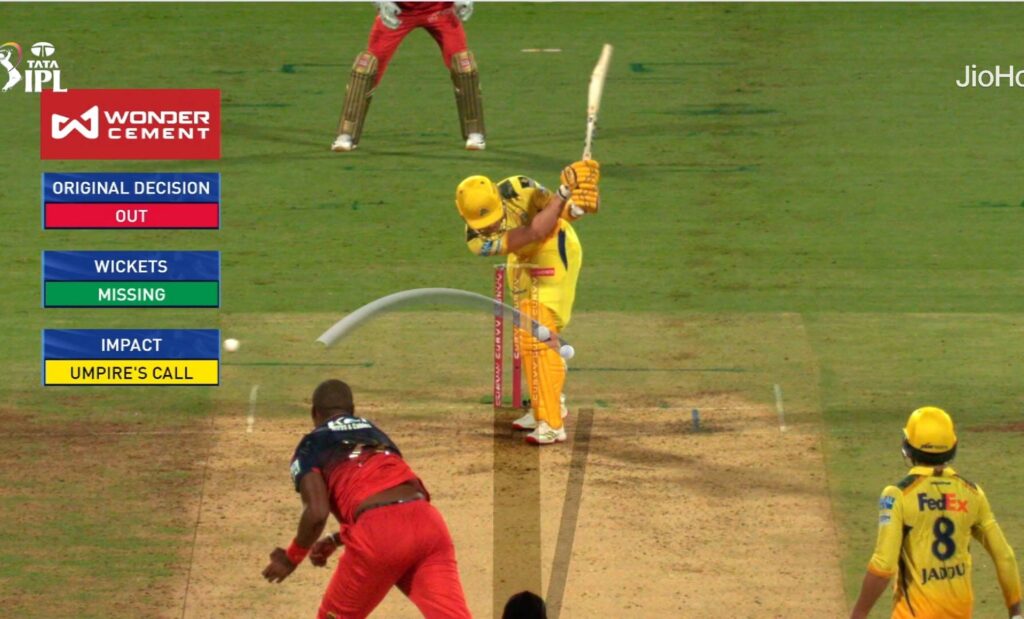
The second controversy occurred in the 19.4 over, bowled by RCB’s Yash Dayal. Dayal delivered a high full toss to CSK’s Shivam Dube, which the on-field umpire did not initially call as a no-ball. Sensing an error, CSK opted to review the decision. The third umpire’s measurement confirmed that Dube’s waist was at 1.11m, while the ball passed at 1.14m, making it a no-ball. This entitled Dube to a free hit, from which he smashed a six.
Reactions and Context
While this incident was less contentious than the Brevis dismissal, it added to CSK’s frustrations with the umpiring. The fact that the on-field umpire missed a clear waist-high delivery raised questions about the accuracy of real-time decisions in high-pressure situations. Unlike the Brevis incident, the review system worked in CSK’s favor here, but the initial error underscored the reliance on technology to correct human mistakes.
Analysts noted that such oversights can disrupt a team’s rhythm, especially in the death overs where every ball is critical. The no-ball call, while rectified, highlighted the need for umpires to be more vigilant, particularly for deliveries that are straightforward to judge, like waist-high full tosses.
The no-ball incident had a mixed impact. Dube’s six off the free hit kept CSK in the hunt, but the single run scored off the subsequent delivery meant the no-ball didn’t drastically alter the outcome. However, it contributed to the narrative of umpiring inconsistencies, as CSK felt hard done by multiple calls in the match.
The Final Over Drama
The match’s climax came in the final over, with CSK needing 15 runs to win. Yash Dayal, entrusted with defending the total, delivered under immense pressure. He started with a dot ball to MS Dhoni, followed by a single. On the third ball, Dayal trapped Dhoni LBW for 12, a decision reviewed but upheld, with the ball crashing into the leg stump. With 13 runs needed off 3 balls, Jadeja hit a boundary, but Dayal restricted CSK to 10 runs in the over, securing a famous victory for RCB.
Dayal’s composure was reminiscent of his heroics against CSK in the previous season, cementing his reputation as a clutch performer. However, the controversies earlier in the innings loomed large, as CSK’s narrow defeat left fans wondering if the umpiring decisions had tipped the scales.
These moments serve as reminders of the fine margins that somewhat define IPL cricket and the ongoing need for refining the sport’s rules and technologies. As the IPL continues to captivate global audiences, addressing these issues will be crucial to ensuring that the game remains a fair and thrilling spectacle for players and fans alike.
Also Read: RCB vs CSK : 3 Reasons For CSK’s Defeat Against RCB