
After completion of the group stages of the Asia Cup, India and Pakistan faced each other once again in the Super Fours stage. It was India who once again prevailed over Pakistan and won the match by 6 wickets, thanks to Abhishek Sharma for his fiery knock of 74 runs of just 39 balls, which accounted of 6 Fours and 5 Sixes. India had won the toss and opted to bowl, Pakistan had posted 171 runs on the board on the back of a knock of 58 runs of 45 balls scored by Pakistani opener Sahibzada Farhan.
India was determined and made sure there were no stones left unturned. Abhishek Sharma gave India a blistering start.Usually it is observed that Shaheen Afridi, who starts by pitching the ball up here, tried to do the opposite and bowled a bouncer to which Abhishek Sharma replied by pulling the ball and putting it into the stands for 6 runs, starting the Indian innings with a sixer. Also in the last encounter, he had danced down the track and had hammered Shaheen Afridi for a Four.
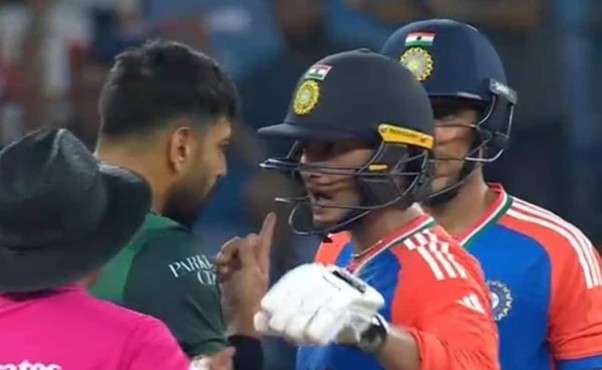
Animated exchange between Haris Rauf & Abhishek Sharma
Abhishek Sharma had gone berserk against the Pakistani bowlers in the last match they faced, So far Shubman Gill had a quiet outing in the tournament, and he wanted to stamp his impression as well. He scored a flurry of boundaries against Shaheen Afridi and Saim Ayub. In the 5th over came Haris Rauf. Abhishek Sharma had edged a boundary on the second ball of the over and there were words exchanged between both of them.
Haris Rauf and Abhishek Sharma were both fired up. On the last ball of the over Haris Rauf bowled a shorter delivery out side off and Gill smashed that ball with his trademark shot, the short-arm jab, and the ball went away from the mid-wicket for a boundary, and then Abhishek Sharma, who was at the non-striker end, and Haris Rauf went in each other’s faces and had a heated altercation. Since then, Abhishek Sharma was in no mood to waste time and smashed the Pakistani bowlers all over the park.
Pakistan’s batting consistency woes
Sahibzada Farhan played the anchor role with a composed half-century, holding the innings together when others struggled for rhythm. Fakhar Zaman looked positive but his early dismissal left pressure on the middle order. The contributions from Saim Ayub and Hussain Talat were brief, causing a dip in scoring during the middle overs. Partnerships lacked fluency, which prevented Pakistan from building sustained momentum.
In the later stages, Mohammad Nawaz and Faheem Ashraf provided vital acceleration with clean hitting. Their cameos ensured Pakistan crossed the 170 mark, setting a competitive yet slightly under-par total. While the batting effort had moments of stability and power, the timing of dismissals hurt progress. Overall, Pakistan’s innings was steady but missed the ruthless edge needed in a high-pressure clash.
India’s successful march towards the target
India’s chase was dominated by the opening pair of Shubman Gill and Abhishek Sharma, who built a match-winning partnership. Gill played a composed innings of 47 runs from 28 balls, keeping the scoreboard ticking with well-placed strokes. Abhishek was far more aggressive, finding boundaries regularly in the powerplay to dent Pakistan’s bowling plans. Their 100+ stand ensured the required rate was always under control.
Suryakumar Yadav couldn’t make an impact and was dismissed for a duck, slowing momentum briefly. Sanju Samson tried to consolidate with a slow knock but didn’t accelerate the chase. Tilak Varma provided support with a quick cameo, helping India edge closer to the target. Overall, India’s batting was controlled, balanced, and anchored by key partnerships.
What Lies ahead
India’s fielding lapses hurt them as key catches were dropped, letting Sahibzada Farhan and Saim Ayub settle and build partnerships. These misses allowed Pakistan to rotate strike freely and accelerate in crucial overs. Overall, the dropped catches gave Pakistan a strong start and added pressure on India’s bowlers. India’s best bowler went wicketless for 45 runs of his 4 overs. India ticked all the boxes they just have to keep up the fielding standards, as they say “Catches win matches,” and you never know how big the impact can be.India next faces Bangladesh on 24th September.
Pakistan’s Asia Cup 2025 campaign is at a crucial stage after losses to India. They must beat Sri Lanka and Bangladesh to stay in contention for the final. Improved batting, disciplined bowling, and sharper fielding are essential. Strong performances in the remaining matches will determine if they can challenge India in the final.