
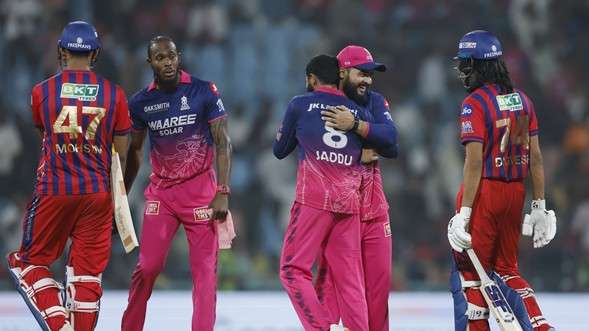
As the Indian Premier League (IPL) 2026 season crosses its midpoint, the Lucknow Super Giants’ (LSG) campaign has been defined by inconsistent performances and structural concerns that have seen them rapidly veer off course. Despite a record-breaking auction that saw the high-profile acquisition of captain Rishabh Pant, LSG has struggled to find cohesion across departments. The franchise currently languishes in ninth place on the points table, having secured only two wins from seven matches.
Following a demoralising 40-run defeat against the Rajasthan Royals (RR) at the Ekana Stadium, the lack of form from key players and an inability to capitalise on home conditions have emerged as major issues. Concerns are mounting over a league-low Net Run Rate of -1.277, alongside a top order that has struggled to find its rhythm. For a team that once prided itself on clinical efficiency, the pressure is mounting; they now face a critical phase where addressing these underlying flaws is essential to remaining a contender in IPL 2026.
Problems aplenty for LSG
One of the most glaring concerns LSG currently faces is the fragility of their batting unit and an inability to utilise the powerplay phase. Despite aggressive options at the top, the team has frequently left the middle order exposed too early, repeatedly failing to convert promising starts into match-winning totals.
In their recent 40-run loss against RR, the team failed to build a foundation, leading to a total collapse for 119. An over-reliance on individuals like Nicholas Pooran and Rishabh Pant has put immense pressure on them; when early wickets fall, the innings tends to lose direction, exposing a lack of depth and adaptability. Consequently, the middle order is being forced to perform rescue acts in every game rather than playing a natural attacking game.
Equally concerning has been their bowling performance. The department once considered the team’s backbone has devolved into a source of major tactical anxiety, lacking both discipline and control. Although veteran Mohammad Shami continues to provide world-class control in the powerplay, the unit’s collective inability to deliver a knockout punch has been shocking, and the pace attack has failed to maintain consistency, particularly in the death overs.
The absence of a reliable finisher in the bowling unit has resulted in LSG conceding heavily in the final overs, handing their opponents easy momentum. Furthermore, the lack of a dominant spin partnership – especially with the absence of a seasoned partner for Ravi Bishnoi – has left the team vulnerable on the traditionally slower surfaces of the Ekana Stadium. There is also an invisible psychological burden weighing on the attack; with the LSG batting lineup repeatedly failing to post or chase competitive totals, the bowlers are operating under a “zero-mistake” policy if they wish to keep the team’s playoff hopes alive.
What lies ahead for LSG
Ultimately, LSG must address these issues by solidifying their middle order, defining clearer bowling roles, and establishing tactical consistency. Until they do so, they risk falling further behind in an increasingly competitive points table, where teams previously considered underdogs are now emerging stronger than ever.
Right now, they find themselves in a race against both time and their own declining momentum. With the lowest Net Run Rate in the league and a mounting tally of losses, the luxury of learning from mistakes has officially expired for the team. If these systemic issues aren’t addressed before their upcoming clash against the Kolkata Knight Riders (KKR) on 26th April.
LSG risks turning a season of high expectations into a disappointing tale of missed opportunities. With the tournament now approaching its most decisive phase, the margin for error is rapidly diminishing, making immediate course correction not just necessary, but essential for their survival in IPL 2026.