
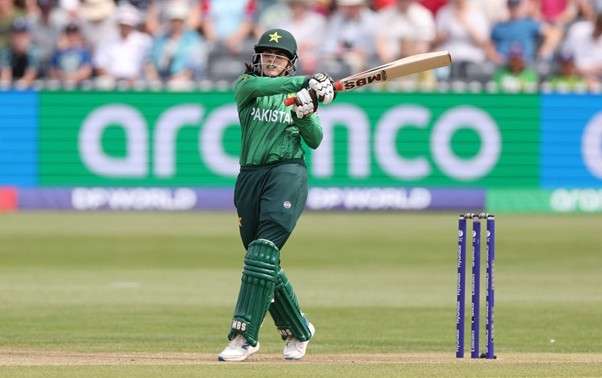
There is a peculiar burden that comes with playing a tournament dead rubber. When the semi-final calculations are dead and the flight itineraries are already printed, tactical structures can easily collapse into listless cricket. Yet, under the afternoon clouds at Bristol on Saturday, Pakistan and the Netherlands fought out a gritty, fascinating scrap that showed precisely why these lower-profile fixtures matter to the evolution of the women’s game.
Pakistan managed to sign off from their otherwise disappointing 2026 ICC Women’s T20 World Cup campaign with a comfortable 37-run victory, but the final scorecard masks a match that was fiercely contested for the opening thirty overs. Opting to bat first, Pakistan relied on a composed, unbeaten 63 from opener Gull Feroza and a crucial 32 from veteran Ayesha Zafar to patch together a competitive 126 for 6. The Netherlands, entering their final game searching for a historic maiden World Cup win, launched a spirited counter-punch through Heather Siegers (24) and captain Babette de Leede (30). However, the associate nation ultimately cracked under a vintage subcontinental slow-bowling choke. A clinical double-wicket maiden from Ayesha Zafar (3/13) and a devastating triple-wicket maiden from skipper Fatima Sana (3/12) triggered a batting collapse, bowling out the Dutch for 89. This definitive Pakistan vs Netherlands post-match review breaks down the tactical moments that settled the clash of the underdogs.
Match Summary & Scorecard
| Match Component | Scorecard Metrics & Data |
| Toss | Pakistan Women won the toss and elected to bat first |
| Pakistan Women |
126/6 (20 Overs) Gull Feroza 63* (52), Ayesha Zafar 32 (29); Iris Zwilling 2/19 (4) |
| Netherlands Women |
89 All Out (18 Overs) Babette de Leede 30 (41), Heather Siegers 24 (16); Fatima Sana 3/12 (3), Ayesha Zafar 3/13 (3) |
| Result | Pakistan Women won by 37 runs |
| Player of the Match | Gull Feroza (63* off 52 balls) |
Key Match Moments
Tactical Breakdown: Powerplay Flurries and Mid-Over Asphyxiation
A detailed technical review of this Pakistan vs Netherlands encounter highlights a tale of two distinct operational halves.
The Middle-Order Squeeze
When Pakistan posted 126, there was a quiet confidence in the Dutch dugout. That belief looked entirely justified when Heather Siegers went on a spectacular powerplay rampage. Taking advantage of some loose opening lengths from Diana Baig and Sadia Iqbal, the veteran opener bludgeoned five boundaries, racing to 24 off just 16 balls. But international cricket is decided by sustained tactical adjustments. Diana Baig responded with a clever slower ball that trapped Siegers plumb lbw, and a sharp direct hit from Eyman Fatima accounted for Phebe Molkenboer.
Once the field spread, Pakistan’s premier spin twins Nashra Sandhu and Tuba Hassan completely altered the match dynamics. They dropped their pace, attacked the stumps, and starved Babette de Leede of boundaries. The pressure became immense, causing the Dutch lower-middle order to panic against the turning ball.
The Associate Reality Check
Ayesha Zafar’s introduction completely shattered the chase. She found unexpected dip, trapping Robine Rijke in front before outfoxing Sanya Khurana with a sharp piece of flight. The final nail in the coffin was an incredibly bizarre run-out: Babette de Leede smashed a powerful straight drive that deflected off the non-striker Iris Zwilling, allowing Zafar to calmly gather and run out a stranded Zwilling. With the fight gone, Fatima Sana brought herself back into the attack, unleashing three perfectly directed yorkers to claim a triple-wicket maiden and wrap up the victory.
Analyst’s Verdict: A Vision for the Future
Concluding this Pakistan vs Netherlands review, both camps leave Bristol with incredibly clear structural lessons. For Pakistan, the win provides temporary relief and salvages fifth place in a brutal group. Yet, Fatima Sana was incredibly honest post-match, acknowledging that their recurring batting collapses losing 4 wickets for 24 runs at the back end of their innings require massive systemic changes before they can challenge elite teams.
For the Netherlands, a winless campaign shouldn’t diminish their immense growth. As Babette de Leede proudly pointed out, this squad consists almost entirely of semi-professional cricketers. Going toe-to-toe with established test nations for long periods provides an invaluable foundation. If the ICC continues to fund these associate pathways, the gap will keep closing, and the next World Cup might feature a completely different story.
Also Read: SCOT vs IRE: Kathryn Bryce’s All Round Effort Stuns Ireland