
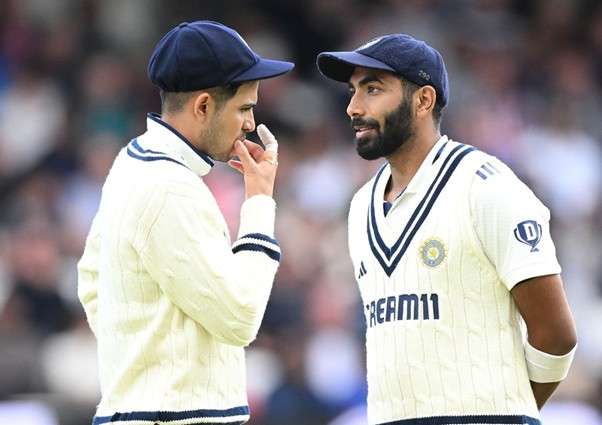
The England vs India Test series of 2025 has reached a thrilling juncture, with the scoreline locked at 1-1 after two intense matches. India, under the captaincy of Shubman Gill, scripted a historic comeback in the second Test at Edgbaston, thrashing England by a staggering 336 runs—their largest overseas Test victory by margin and their first win at that venue. As the teams prepare for the third Test at Lord’s, starting July 10, the question on everyone’s mind is: Can Shubman Gill’s brigade continue their winning momentum and rewrite history at a venue where India has struggled for decades?
India’s Test Record at Lord’s: A Historical Challenge
Lord’s, often referred to as the “Home of Cricket,” has been a fortress for England and a graveyard for many visiting teams, including India. In 19 Tests played at this iconic venue, India has managed just 3 wins, with 4 draws and 12 losses. Their victories came in 1986 under Kapil Dev, in 2014 under MS Dhoni (by 95 runs), and in 2021.
The most recent loss was in 2018, when India fell to England by 159 runs under Virat Kohli’s captaincy. This record underscores the challenge awaiting India, as Lord’s has traditionally been a difficult ground for them.
The pitch at Lord’s is known for its early movement, favoring fast bowlers with seam and swing, which often troubles visiting batting lineups. India’s historical struggles at this venue add a psychological hurdle, making the upcoming Test a true test of their resilience and adaptability.
Shubman Gill: The Beacon of Hope
If there’s one player who can inspire India to overcome their Lord’s jinx, it’s Shubman Gill. The 25-year-old captain has been nothing short of sensational in the series so far. In the first Test at Headingley, despite India’s defeat by 5 wickets, Gill led from the front with a gritty century, contributing significantly to India’s total of 471 and 364. However, it was his performance in the second Test at Edgbaston that truly announced his arrival as a leader and a match-winner.
Shubman Gill’s first-innings double century of 269 was a masterclass in batting, breaking numerous records. He became the first player in Test history to score a double century and a 150 in the same match, adding 161 in the second innings for a total of 430 runs. This earned him the Player-of-the-Match award and cemented his status as India’s new talisman.
Shubman Gill’s 269 is also the highest score by an Indian captain in Tests, surpassing Virat Kohli’s 254 not out against South Africa in 2019, and the highest by an Indian batter outside Asia, eclipsing Sachin Tendulkar’s 241 not out in 2004.
Shubman Gill’s leadership has been equally impressive. Taking over the captaincy in his first Test series, he has shown maturity beyond his years, making astute decisions and leading by example with the bat. His ability to stay calm under pressure and inspire his teammates was evident at Edgbaston, where India dominated both with the bat and ball. He also took the match-winning catch, showcasing his all-around contribution.
VIDEO | Indian pace bowler Jasprit Bumrah bowls during practice session at the Lord’s Cricket Ground in London before the third Test between India and England which is starting Thursday. The Indian team, along with captain Shubman Gill, KL Rahul, Yashasvi Jaiswal, Rishabh Pant… pic.twitter.com/Z8AOBypAFT
— Press Trust of India (@PTI_News) July 8, 2025
The Challenge Ahead: Lord’s and England’s Fightback
While Shubman Gill’s form is a massive boost for India, the third Test at Lord’s presents unique challenges. The pitch at Lord’s is known for its early movement, which could trouble India’s top order, especially in the first session. The average first-innings score at Lord’s is 310, while the fourth-innings average is just 154, indicating the difficulty of chasing runs.
England, stung by their humiliating defeat at Edgbaston, will be desperate to regain their footing. Ben Stokes, England’s talismanic captain, will likely rally his troops, and the home crowd at Lord’s will add to the intensity.
England’s batting has shown glimpses of brilliance, with players like Zak Crawley and Joe Root capable of turning the game on their head. Their bowling attack, potentially bolstered by Jofra Archer’s return, will look to exploit the conditions. However, England’s lower-order collapse in the second Test (7 for 41 and 6 for 31) highlighted vulnerabilities that India can target.
India’s Strengths: Beyond Shubman Gill
While Shubman Gill has been the standout performer, India’s depth in both batting and bowling cannot be overlooked. Yashasvi Jaiswal, with his aggressive style, scored 87 in the second Test and could trouble England’s bowlers on a flat Lord’s track.
Ravindra Jadeja, with his all-round abilities, contributed 89 and 69 at Edgbaston, while also providing crucial breakthroughs with the ball. Rishabh Pant, who scored 65 in the second innings, has shown his ability to change the game’s complexion with his aggressive strokeplay. Pant also became the first Indian wicketkeeper to score centuries in both innings of a Test, adding to India’s firepower.
In the bowling department, Akash Deep emerged as a revelation at Edgbaston, claiming a 10-wicket haul (6/99 in the second innings) to dismantle England’s batting lineup. His ability to generate pace and movement could be key at Lord’s, where fast bowlers often thrive early on. Mohammed Siraj, who picked up 6 wickets in the first innings at Edgbaston, will also be crucial in exploiting any early movement.
The absence of Jasprit Bumrah in the second Test was mitigated by Akash Deep’s performance, but India will hope their bowling unit can adapt to Lord’s unique conditions.
England’s Perspective
England started the series strongly, chasing down 371 in the first Test at Headingley, thanks to Ben Duckett’s 149 and fifties from Joe Root and Zak Crawley. However, their batting collapsed in the second Test, managing only 407 and 271 in response to India’s 587 and 427/6 declared.
England’s bowling, led by Chris Woakes, will need to find consistency to challenge India’s formidable batting lineup. The potential inclusion of Jofra Archer for the third Test could add a new dimension to their attack, especially on a pitch that suits his pace and bounce.
Can India Rewrite History?
The stage is set for a historic clash. India, riding high on confidence after their Edgbaston triumph, faces the daunting task of conquering Lord’s—a venue that has haunted them for decades. Shubman Gill, with his exceptional form and leadership, holds the key to unlocking this challenge. His ability to adapt to different conditions and lead from the front will be tested against England’s resilience and the psychological weight of India’s poor record at Lord’s.
However, cricket is as much about momentum as it is about history. India’s emphatic win at Edgbaston has shifted the psychological balance, and Gill’s brigade has shown they are capable of rising to the occasion. If they can replicate their Edgbaston performance—dominating with the bat and bowling with precision—they could well script another chapter in Indian cricket history.
As the teams take the field on July 10, all eyes will be on Shubman Gill and his men. Can they continue their winning momentum and take a decisive 2-1 lead in the series? Or will Lord’s once again prove to be India’s nemesis? The answer lies in the hands of Gill and his team, who have already shown they are capable of defying the odds.