
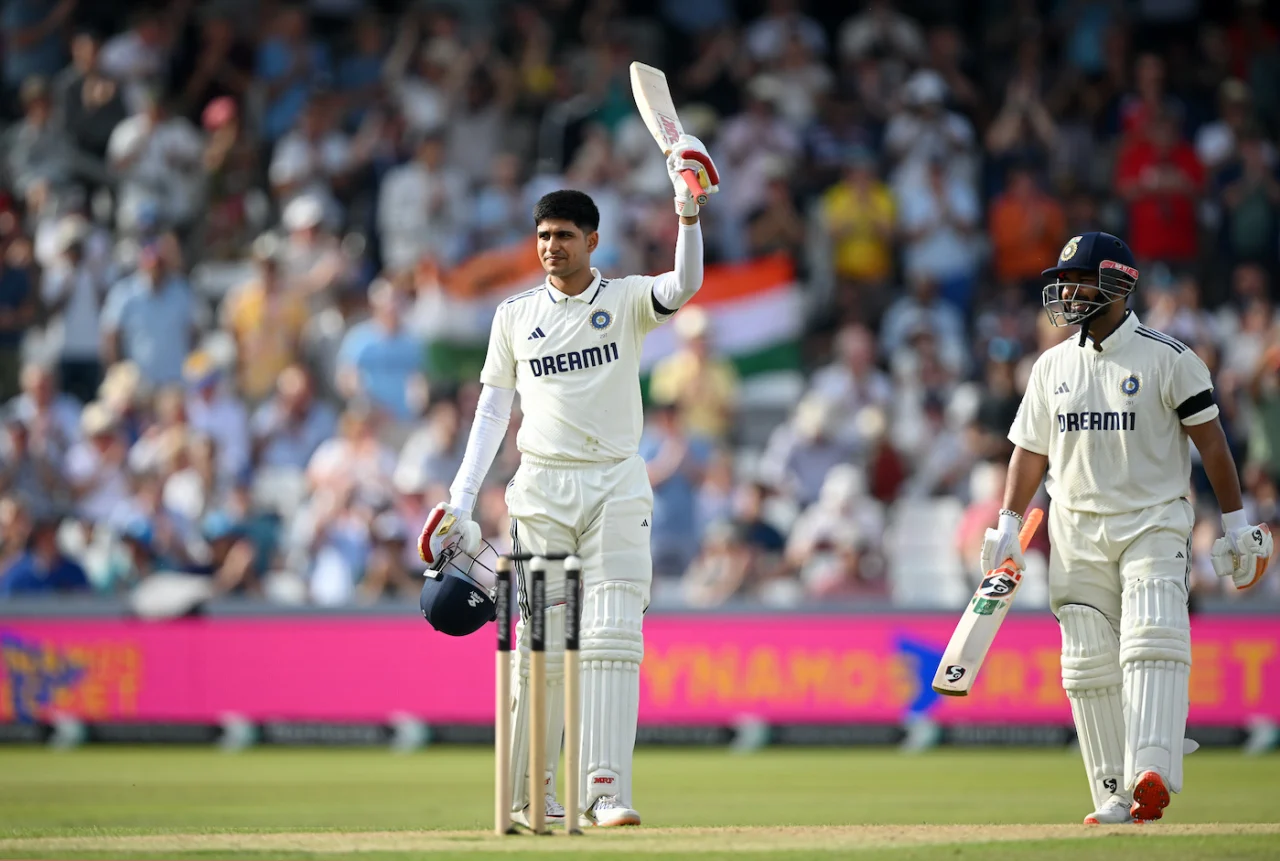
Shubman Gill’s first Test as India’s full-time captain has sparked a chorus of concern, not only for the team’s defeat but for the manner in which it unfolded. After India failed to defend a fourth-innings target of 371, with England comfortably chasing it down to win by five wickets, former players have questioned Shubman Gill’s approach, with one describing the tactics as more reactive than assertive.
When Shubman Gill walked out for the toss in Leeds, England, for the first time as Test captain last week, it marked a generational shift in Indian cricket. In the new era, post–Virat Kohli and Rohit Sharma—the two previous captains of Team India, now retired from the longest format—there will be a shift. Not just on the field, but in Indian cricket culture as a whole. At 25,Shubman Gill represents a transformation: in playing style and public presence.
Shubman Gill’s ineffective captaincy was a talking point of India’s defeat in 1st Test
Shubman Gill’s cricketing merit remains undisputed, with over 2,000 runs in Test matches and even more impressive figures in One-Day Internationals. In his first Test innings as captain at Leeds, Shubman Gill scored a fluent 147, filled with old-school elegance and classical off-side play that’s his hallmark.
But his ascension to leadership comes not solely on the back of runs. It is also a testament to his relatively clean, non-controversial image and his soft-spoken demeanour. Shubman Gill’s method of leadership is likely to be a modern hybrid—neither as animated as Kohli nor as laid-back as Sharma. Shubman Gill appears far more conscious of his image than his predecessors were when they became captains, which could have a trickle-down effect on how he leads.
Every new era in cricket needs a strong start—a solid first brick in the foundation. For Shubman Gill, that first Test as India’s new red-ball captain ended in disappointment, as England chased down 371 in Leeds to take a 1-0 lead in the five-match series.But despite the setback, Shubman Gill remained composed in his post-match presentation, offering a candid assessment of where things went wrong for his team.
India were not outplayed across all five days. In fact, for large parts of the game, they held the upper hand. Five different Indian batters notched up centuries—Shubman Gill himself, Yashasvi Jaiswal, KL Rahul, and a sensational twin hundreds by Rishabh Pant. But the problem lay in what happened between those moments of brilliance.
In both innings, India collapsed dramatically after being in dominant positions. From 430/3 in the first innings, they lost their last seven wickets for just 41 runs. In the second innings, it was 287/3 at one point, but the final total read 364. The inability of the middle and lower order to capitalise proved costly.
Speaking after the match, Shubman Gill acknowledged this pattern. He noted that India were in commanding positions in both innings but failed to finish strong. He admitted that they had to address the issue going into the second Test.
India’s fielding also left much to be desired. The team dropped multiple catches across both innings—six in total—with Yashasvi Jaiswal putting down four himself. One of them came when Ben Duckett was on 97; he went on to score 149 and win the Player of the Match award. Shubman Gill did not shy away from addressing this. He admitted that the team needs to improve in the field and take their chances, especially on crucial final-day pitches where one missed opportunity can turn the game.
The loss was made tougher by the fact that England’s 371-run chase was their second-highest successful fourth-innings pursuit in Test history—and the highest ever at Headingley. Zak Crawley and Duckett’s 188-run opening stand set the tone, and India’s bowlers, including star names like Jasprit Bumrah and Mohammed Siraj, struggled to make breakthroughs.
Still, Shubman Gill wasn’t overly critical. He acknowledged that the side was young and learning, and believed they would improve with time. Despite the early loss, his leadership tone was mature, focused on growth rather than blame. However many criticized Shubman Gill over his reactive captainship in the 1st Test vs England, former Indian skipper Mohammed Azharuddin have urged everyone to stay calm and pateint with Shubman Gill and give him a fair chance as a skipper for India.
Mohammad Azharuddin appeals to be patient with Shubman Gill and his captaincy stint
Former captain Mohammad Azharuddin has defended reigning skipper Shubman Gill following India’s loss to England in the series opener by five wickets at Headingley. The 62-year-old asked the critics to be fair to Gill by not judging him after just one Test. Like Ravi Shastri, Azharuddin wants the 25-year-old to get a longer rope as India’s Test captain.
The remarks came amid criticism over Gill’s leadership as England successfully chased 371 against the tourists in the opening game. Many believed that Gill was defensive in his leadership tactics during the fourth innings.
Mohammad Azharuddin said (via India Today):
“This is his just first match as a captain. You just can’t talk about captaincy; it’s too early to talk about captaincy. We should give him a fair chance, and he has just taken over. So, you should give him a lot of time and support. We cannot just complain and criticise players like that.”
Mohammad Azharuddin added that India lost the opening Test because of their twin collapse. He continued:
“We lost because of batting collapse, but anyways, now they have to pick the right players, and bowling has to be perfect.”
Notably, India lost their last seven wickets for 41 runs in the first innings. The visitors again fell like a pack of cards, losing their last six wickets for 31 runs in the second innings.
Mohammad Azharuddin further warned Team India not to be too reliant on premium pacer Jasprit Bumrah ahead of the second Test in Birmingham, which begins on July 2. The veteran further called for the inclusion of wrist spinner Kuldeep Yadav in the playing XI, saying:
“They are too much dependent on Bumrah. It’s not easy because you need more experienced bowlers, and they should play Kuldeep Yadav.”
Barring Jasprit Bumrah, Team India bowlers looked clueless in the opening Test match. Prasidh Krishna bagged five wickets but conceded more than six runs per over. Mohammed Siraj and Shardul Thakur also managed just two wickets. Meanwhile, sole spinner Ravindra Jadeja returned with a solitary scalp.
Ironically, while his leadership invited criticism, Shubman Gill the batsman showed class and composure in the first innings, scoring a sublime 147 off 227 balls. The knock placed him among the rare elite—only the fifth Indian to score a Test century on captaincy debut. However, a quick-fire dismissal for just 8 in the second innings and lack of field authority left his debut as captain bittersweet. The young skipper must now wear dual hats—lead with the bat and inspire with tactics—as India aim to square the series.
The second Test at Edgbaston, beginning July 2, poses a formidable challenge. India have never won a Test at the venue, losing seven of eight matches played there. The historic ground, known for pace and bounce, has been a graveyard for Indian teams of the past. For Gill, the pressure to bounce back is immense—not just to answer critics like Manjrekar, but to cement his place as a capable long-term Test leader.
India’s selection and strategy will be closely scrutinized, especially how they use their fast-bowling resources in Birmingham. Veteran spinner R Ashwin also weighed in post-Leeds, suggesting that Shardul Thakur should’ve bowled more in the first 40 overs. These miscalculations, coupled with England’s Bazball-inspired aggression, exposed India’s reactive mindset.
Shubman Gill’s captaincy may not have started with a win, but his calm, clear-headed reflections gave a glimpse into his potential as a long-term leader. The road ahead is long—and for Gill and India, this may just be the tough lesson they needed to set the tone right ahead of the 2nd Test at Edgbaston on 2nd July .
Also Read: ENG vs IND : Shubman Gill Appointed Test Skipper For Red Ball