
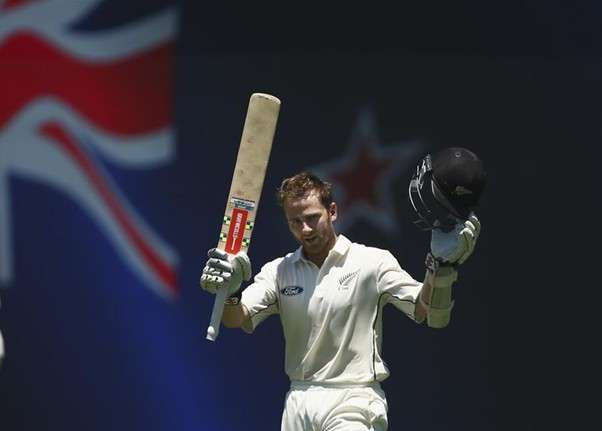
There is a quiet, almost meditative quality to the way Kane Williamson plays Test cricket. In an era where the red ball is routinely bashed out of shape, and strike rates have crept into the vernacular of the longest format. Kane Williamson reminds us that time is still the ultimate currency. He bats as if the concept of the clock doesn’t exist, wearing down bowling attacks not through violent aggression, but through a precise repetition of defensive discipline.
There is a quiet, almost meditative quality to the way Kane Williamson plays Test cricket. In an era where the red ball is routinely bashed out of shape and strike rates have crept into the vernacular of the longest format, Williamson reminds us that time is still the ultimate currency. He bats as if the concept of the clock doesn’t exist, wearing down bowling attacks not through violent aggression, but through an agonizingly precise repetition of defensive discipline.
Watching him at the crease is a study in mechanics. He plays the ball later than almost anyone else in the modern game, frequently adjusting his soft hands so an outside edge falls harmlessly short of a waiting slip cordon. He doesn’t look to dominate a session; he looks to survive it, knowing that if he stays out there long enough, the opposition will eventually break.
While his entire career is littered with defining moments, three specific outings stand as the absolute peak of his craft. These aren’t just big hundreds; they are structural masterclasses chiseled out when the margin for error was completely non-existent.
Kane Williamson’s 140 vs Australia (Brisbane, 2015)
The Context
To appreciate the weight of this innings, you have to remember what the Gabba felt like for visiting teams in 2015. It was a fast-bowling fortress. Australia had just racked up a massive 556 in their first innings on a deck that possessed steep, venomous bounce. When Martin Guptill fell early, Kane Williamson walked out to face Mitchell Johnson at his most hostile, a firing Mitchell Starc, and the relentless accuracy of Josh Hazlewood. New Zealand was expected to fold quickly under the physical barrage.
Tactical Execution
What followed was perhaps the most technically perfect century scored by a visiting batsman in Australia that decade. Kane Williamson realized that trying to avoid the short ball on this surface was fatal. Instead of ducking blindly, he used the extra pace of the Gabba to his advantage. He rode the bounce with immaculate control, rolling his wrists over the ball to play the pull shot firmly along the grass.
His trademark, however, was how he handled Starc angling the ball across him. Time and again, Williamson delayed his stroke by a fraction of a second, waiting for the ball to arrive directly under his eyes before tapping it through the gully region for four. He hit 24 boundaries in a masterclass that felt completely detached from the chaos around him. While the Black Caps ultimately lost the Test, this 140 was the moment the world realized Williamson wasn’t just a very good batsman, he was an elite technician capable of neutralizing world-class pace on their own terms.
Kane Williamson’s 132 vs England (Wellington, 2023)
The Context
The situation at the Basin Reserve looked entirely hopeless. Ben Stokes’ England had enforced the follow-on after rolling New Zealand for 209 in their first innings. Trailing by 226 runs, the Black Caps were staring down the barrel of an embarrassing, premature series defeat. To make matters worse, Williamson entered the frame in terrible form, having scratched around for runs in the previous weeks while looking uncharacteristically vulnerable outside off-stump.
Tactical Execution
This innings wasn’t built on fluent strokeplay; it was a test of temperament. Facing James Anderson and Stuart Broad operating with a brand-new ball, Kane Williamson completely shut down his scoring options through the off-side. He forced England’s veteran pair to bowl straight to him, picking up his runs through tucks off his hip and gentle pushes into the mid-on vacancy.
As the day progressed and the pitch flattened, Williamson’s defensive shield became completely impenetrable. He batted for over seven hours, anchoring partnerships with Tom Latham and Daryl Mitchell to slowly erase the massive deficit and set England a target. It was a clinic in mental endurance. When Kane Williamson was finally caught down the leg-side off Olly Robinson for 132, he had given his bowlers just enough runs to play with. Neil Wagner closed the game out the following day, securing a legendary 1-run victory that simply would not have happened without Williamson’s stubborn resistance.
Kane Williamson’s 102* vs South Africa (Hamilton, 2017) – A Final-Day Escape Act
The Context
This is the hidden gem among Kane Williamson’s catalog of test hundreds. On a wearing Seddon Park pitch that was spitting and turning, New Zealand were set a tricky target of 175 on the final day to win the match. While the target seemed small, the conditions were atrocious for batting. Morne Morkel was extracting unplayable bounce from a good length, and Left-arm spinner Keshav Maharaj was ripping the ball out of the rough.
Tactical Execution
With wickets falling with alarming regularity at the other end, Williamson played an innings of extreme tactical restraint. He recognized that Maharaj was the primary threat on the crumbling track. Rather than staying trapped on his crease, Williamson used his feet aggressively, smothering the spin before it could bite into the surface.
When Morkel came back for a hostile spell of short-pitched bowling, Williamson chose to absorb the physical blows rather than risk a loose shot. He stayed inside the line of the ball, letting it hit his gloves or shoulder, completely taking the short-leg fielder out of play. His unbeaten 102 was a masterpiece of survival; it lacked the glamour of a match-winning chase, but when rain arrived to end the game with New Zealand nine wickets down, Williamson was still standing. It was a rescue that saved the series, demonstrated his tactical versatility on a turning deck and underlined his immense value to the side.
The Kane Williamson Legacy in Test Cricket
When we analyze Kane Williamson’s top 3 Test knocks, a definitive theme emerges. He does not need the luxury of a flat pitch or a tiring bowling attack to construct a masterpiece. His greatest contributions are consistently born out of adversity whether it’s facing down a lethal pace attack at the Gabba, rescuing a team forced to follow on at Wellington, or fighting a lone battle on a cracking day-five surface in Hamilton.
By prioritizing balance, playing the ball late, and demonstrating an almost mechanical emotional detachment from pressure, Williamson redefined what it means to anchor a modern Test batting order. Long after he steps away from the crease, these three definitive centuries will remain the ultimate manual for how to construct a long-form innings when your back is firmly against the wall.
Also Read: ENG vs NZ: 3 Best Knocks Of Kane Williamson In ODI Cricket