
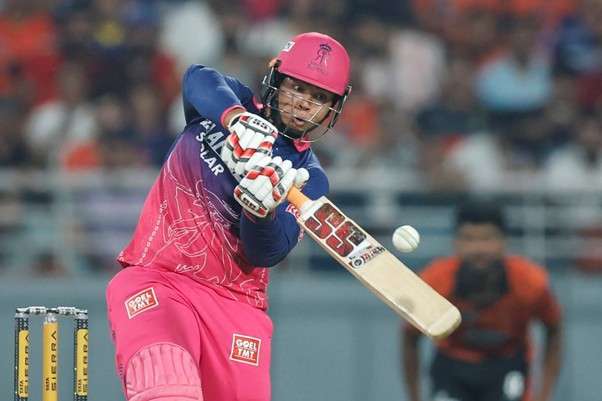
As the Gujarat Titans (GT) prepare for tonight’s high-stakes Indian Premier League (IPL) 2026 Qualifier 2 match at Mullanpur, New Chandigarh, their primary hurdle from the opposition team, the Rajasthan Royals (RR), is going to be the 15-year-old prodigy who is rewriting the T20 record books, Vaibhav Sooryavanshi. He has successfully transformed the season with his fearless strokeplay, and recently in the Eliminator match against Sunrisers Hyderabad (SRH), he smashed a breathtaking 97 off just 29 balls.
Vaibhav Sooryavanshi already holds the record for the most sixes in a single IPL season, breaking the legendary Chris Gayle’s long-standing record by reaching 65 maximums. Having amassed a remarkable 680 runs this season, Vaibhav Sooryavanshi continues to stand as a massive threat to completely dismantle GT’s disciplined bowling unit.
GT’s strategy for Vaibhav Sooryavanshi
Encouragingly for GT, there is evidence that the prodigy can be controlled, as in a previous league-stage fixture this season, Mohammed Siraj was successfully able to dismiss Vaibhav Sooryavanhi. Since they also have Kagiso Rabada in their bowling unit, they must immediately crack the code to dismissing this explosive teenage sensation before he can weaponise the Mullanpur powerplay restrictions and ultimately book a place in the IPL 2026 final.
The GT bowlers must utilize an aggressive length in order to target the batter. Sooryavanshi’s core strength is his ability to clear his front leg and use a high backlift for expansive drives, and this makes him prone to getting cramped when pacers intentionally target the body line. Essentially, the Titans’ fast bowlers must resist the temptation to offer width or overpitch in the Powerplay and instead target the body.
A primary example is the ribcage trap, where bowlers like Mohsin Khan have demonstrated that hitting a hard length directly at the teenage opener’s left shoulder forces him into highly rushed pull or hook shots. Additionally, an aggressive field setup could potentially help in dismissing this batter. Captain Shubman Gill must deploy a fine leg, a deep backward square leg, and a catching mid-wicket right from the first ball to capitalize on the top edges generated by these heavy bouncers.
By forcing Vaibhav Sooryavanshi to play an uncomfortable pull shot early in his innings, GT can increase the chances of dismissing him before he settles into his rhythm. Equally important will be GT’s ability to maintain disciplined lines outside the off-stump. With the formidable bowling pair of Mohammed Siraj and Kagiso Rabada, GT has a premium opening option, and the success of this blueprint rests entirely upon their execution. Both bowlers possess the exact tools required to counter this teenage prodigy on the field.
If the young opener survives the initial few overs, GT’s pace attack must quickly transition to bowling slower-ball cutters on the Mullanpur surface to contain his momentum. They can rotate their pacers strategically to constantly alter the pace, variation, length, and angle. Against a player who thrives on pace and predictable lengths, a change of pace will become a crucial defensive weapon.