
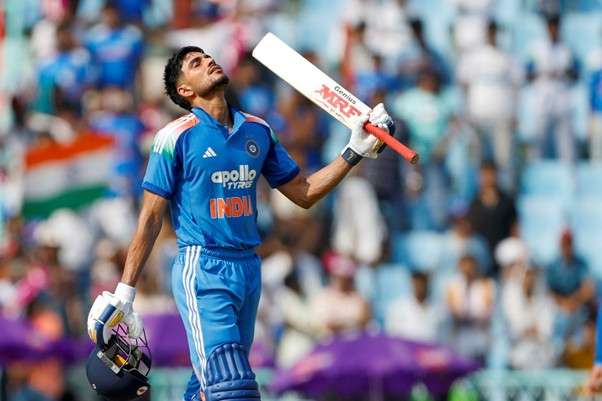
India’s upcoming tour of New Zealand has raised an important question about the place of One Day Internationals in modern cricket. Shubman Gill will lead India in the first three ODIs, while Shreyas Iyer will take over as captain for the final two matches. Shubman Gill is also absent from India’s T20I squad for the New Zealand tour, with Shreyas Iyer named captain for that series. While workload management and future planning may explain these decisions, they also raise questions about the importance given to the 50-over format.
Why Change the Captain in the Middle of a Series?
India will play five ODIs against New Zealand. Shubman Gill will lead the first three matches, while Shreyas Iyer will captain the last two. The change has attracted attention because Shubman Gill is India’s regular ODI captain. Reports suggest that the decision is linked to India’s Test preparations. Shubman Gill is also the Test captain, and the team has an important two-match Test series ahead.
Preparing for Test cricket is understandable. The format demands patience, practice, and a different mindset. However, should that preparation require a change in captaincy during an ODI series? In my opinion, this is where the bigger question begins. If India wants to prepare seriously for the 2027 ODI World Cup, every ODI series should have a clear purpose. Changing the captain halfway through a series may affect that continuity. This does not mean Shreyas Iyer is not capable of leading India. He has experience and has captained teams in the IPL. The concern is about planning, not his ability.
Are ODIs Getting Less Importance?
India’s cricket calendar includes three formats. Each format has different demands. Test cricket remains important, while T20 cricket attracts huge attention because of its fast pace and entertainment value. ODI cricket sometimes appears to sit between the two. India are preparing for the next ODI World Cup in 2027. This makes every series an opportunity to build a settled team. Players need time to understand their roles. The captain also needs time to understand the strengths and weaknesses of the squad.
When the captain changes during a series, that process becomes harder to follow. It does not automatically mean the team will perform poorly. However, it raises a fair question about how much value India places on continuity in ODI cricket. If the goal is to win the 2027 World Cup, should the team not give its ODI captain enough time to build a stable combination?
The Shubman Gill Question Across Formats
Shubman Gill’s situation makes this even more interesting. He leads India in Tests and ODIs, but he has not been part of the regular T20I setup since December 2025. He was also left out of India’s 2026 T20 World Cup squad. There are valid reasons for selecting different players in different formats. T20 cricket requires a particular approach, and India have backed other players in their top order. Gill’s absence should not automatically be treated as a mistake.
However, his situation shows how differently India can plan for each format. Shubman Gill is trusted to lead the Test and ODI teams, yet he is not part of the current T20I leadership setup. Now, even in ODIs, he will not lead the team for the entire New Zealand series. This raises questions about India’s long-term planning. Different captains for different formats can work well, but each format still needs a clear direction. The team must avoid making changes that leave players uncertain about their roles.
What Is India’s Priority?
India has enough talent to compete across all three formats. The challenge is to manage that talent without losing sight of long-term goals. Shubman Gill’s absence from the final two ODIs may be understandable from a preparation point of view. Shreyas Iyer’s experience also gives him a fair opportunity to lead the team. But the decision raises a wider question about the importance given to ODI cricket ahead of the 2027 World Cup.
Shreyas Iyer’s early struggles as T20I captain also show that leadership takes time. Results, team combinations and tactical decisions must be judged together. Frequent changes may sometimes be necessary, but players also need clear roles and the confidence that comes from a settled plan. In my opinion, India must give all three formats the attention they deserve. Preparing for Tests should not mean losing sight of ODI goals, just as building a T20I side should not mean changing plans without a clear reason. The real question is simple: Are India preparing for the 2027 ODI World Cup with a clear plan, or are ODIs taking a back seat whenever another format demands attention?
Also Read: IND vs WI: Mohammad Kaif’s Harsh Words For Shubman Gill