
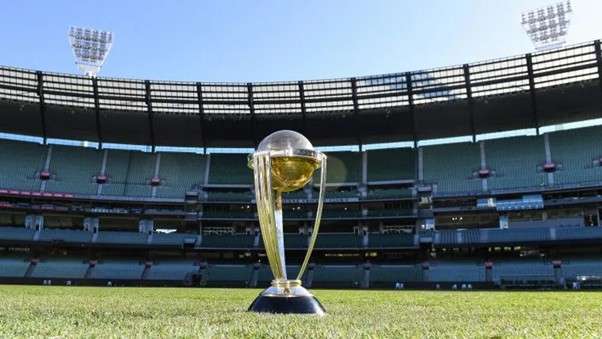
It’s quite strange that the ICC took a shocking decision to reduce the 14-team ODI WC 2027 to a 12-team ICC ODI WC 2027. There was a ray of hope for Associates to stamp their authority in the upcoming marquee tournament, but the governing body had other ideas, unfortunately. ICC ODI WC is considered to be the ultimate tournament of the sport, where the whole world fights for the silverware, but it’s really the World Cup teams participating in it; it’s tough to answer; let’s find out.
ICC’s double standards
ICC ‘n’ times have mentioned that they want to make cricket a global sport. ICC Chairman Jay Shah is tipped to revolutionize the sport; there’s no doubt ICC T20 WCs have skyrocketed, but the traditional format is again and again taking a backstep. ICC ODI WC 2007 was the last championship that had 16 teams in it & even after that, in 2027 we are having only a 12-team ODI WC which raises eyebrows.
ICC ODI WC 2019 & 2023 were truncated formats with only 10 teams a piece with a round-robin format for all teams. The Associates, like the Netherlands, Scotland, and Nepal, etc, had to fight their teeth out to participate in the tournament. Afghanistan qualified for the 2019 ODI WC, which was a major achievement despite being winless throughout the whole championship, but they outclassed big teams in the 2023 edition & almost qualified for the semis, which can’t be ignored.
The same, though, doesn’t apply to the Netherlands in 2023 when they qualified for the championship. Netherlands beat South Africa & Bangladesh one-sidedly; still, they have to fall in line and fight for a place in the WC. It’s quite baffling to see that sides like the Netherlands and Scotland aren’t given full member status despite being a force to reckon with in global events; perhaps the ICC doesn’t want to increase competition, as giving status means increasing their annual matches officially.
Who benefits from the 12 Team ICC ODI WC 2027?
There would be two groups of 6 teams & undoubtedly, India & Pakistan would be in one group, as broadcasters earn massively through that contest. Then the second round comes: Super 7, in which there would be 4 Teams from Group A & 3 Teams from Group B (*just an assumption or it can be 3 teams from Group A). It’s most likely that India & Pakistan would be in Super 7, which means another blockbuster clash for broadcasters. It would sound very harsh, but it seems that the ICC created/agreed to the new model as there would be two heavyweight matches even before the semi-finals.
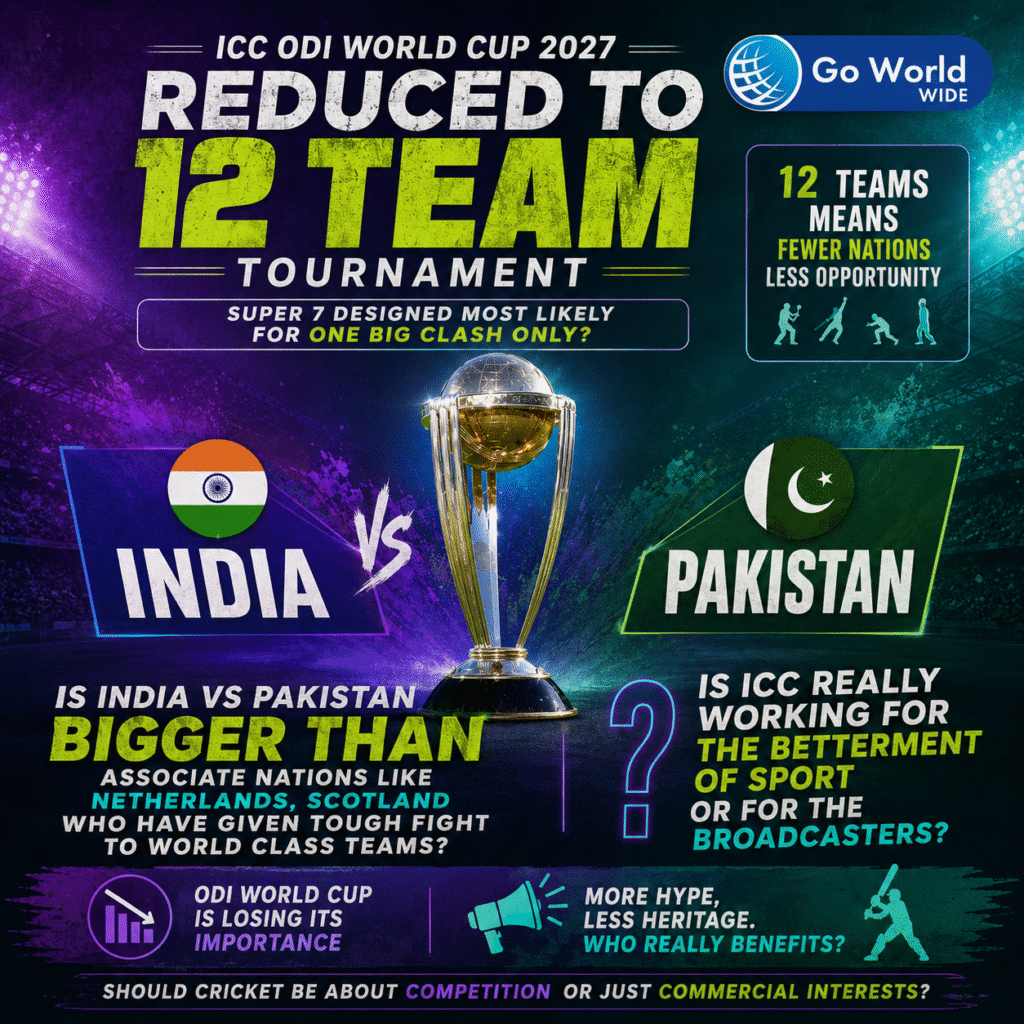
In all this chaos, the associate nations are at a loss. There was a saying earlier that no one is above the game, but it seems that now no one is above broadcasters. ICC often says they want to make the sport competitive, but upsets only create headlines rather than a rivalry, which is just for the sake of it. It’s quite crystal clear that associate nations have to break the barrier of ICC ODI WC Qualifiers (*dates not revealed & top-ranked WC qualifiers team will qualify) & then play a Super Series of 3 teams (*out of which one team will qualify from 12th,13th & 14th team) and then qualify for ODI WC 2027.
It won’t be wrong to say that the ICC ODI WC is somewhat, or is officially, losing its importance. There is buzz for Virat Kohli & Rohit Sharma as they are face of viewership, but unfortunately, no one is the face of associate nations, which is deeply sad. Even the Namibia Cricket Chair openly said that associate nations should focus on T20 WCs rather than the ODI WC, which is a statement that the road ahead is going to be very steep for the upcoming ODI WCs.
Also Read: ICC ODI WC 2027: Rudi Van Vuuren Backs Updated ODI WC 2027