
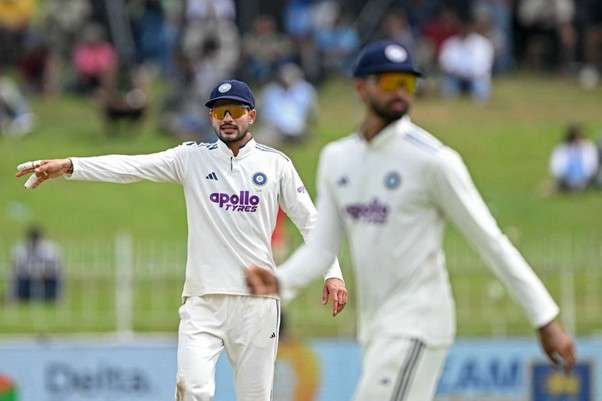
India’s captain Shubman Gill stood by the decision to enforce the follow-on against Sri Lanka, insisting the call was justified given the rain interruptions and uncertainty over how much cricket would be possible. India may have missed out on a 2-0 series sweep against Sri Lanka, but Shubman Gill has no regrets about one of the biggest tactical calls of the Colombo Test.
Despite Sri Lanka successfully saving the match after being asked to follow on, the Indian captain defended the decision, arguing that it was made based on the circumstances at the time rather than the benefit of hindsight. India eventually settled for a 1-0 series victory, but the draw left them frustrated after dominating large portions of the Test.
Why India Enforced the Follow-On
India had built a commanding position after declaring their first innings at more than 503 and bowling Sri Lanka out with a substantial deficit. However, the match had already been heavily disrupted by rain. India had lost around 70 overs during the first four days, leaving Gill and his team uncertain about how much playing time would actually remain.
That uncertainty played a major role in the follow-on decision. Gill explained that India had two options: wait, set Sri Lanka a target of around 400 and then chase whatever remained, or immediately put Sri Lanka back in and try to finish the match with the time available.
“We didn’t know how much cricket there would be on days four and five. And we wanted to take that chance,” said Shubman Gill.
For Shubman Gill, the second option offered greater control over the available time.
The Pitch Refuses to Break Down
India’s calculation depended heavily on the Colombo surface deteriorating as the Test progressed. Instead, the pitch remained relatively slow without developing the kind of uneven bounce that could have made batting increasingly difficult. This became particularly problematic for India’s spinners.
Gill pointed out that there were very few opportunities for dismissals through the stumps throughout the Test. India managed only four lbw dismissals and two bowled dismissals to the spinners, highlighting how difficult it was to attack the batters directly.
“The wickets were not in play at all,” said Shubman Gill.
As the surface slowed, Sri Lanka’s batters found it easier to defend. Once they stopped looking for runs and concentrated on survival, the number of realistic dismissal options reduced significantly.
India Ran Out of Time
India entered the final day needing just four wickets, with Sri Lanka only 16 runs ahead. The visitors pushed aggressively for a victory, but the breakthrough they needed never arrived quickly enough. India managed only three wickets during the final day, and none came through an lbw or bowled dismissal.
Gill acknowledged that India had created opportunities earlier in the match but failed to convert enough of them.
“On day four we created chances and momentum; if we could have got one or more wickets then maybe the result would have been different,” said Shubman Gill.
With only 17 overs remaining when the players shook hands, India’s pursuit of a clean sweep was over. Despite the outcome, Gill strongly rejected the idea that the follow-on decision had backfired
“I Wouldn’t Say It Has Backfired,” said Shubman Gill.
Shubman Gill’s argument was rooted in the uncertainty surrounding the weather. Had India declined to enforce the follow-on and rain returned, the decision would have faced criticism from another angle. Gill also credited Sri Lanka for their resistance, rather than attributing the draw solely to India’s tactical choices.
“All this is hindsight. You have to take the best decision possible at that time in that situation. They played really well. Some things didn’t go our way,” said Shubman Gill.
WTC Qualification Still in Sight
The draw was disappointing, particularly because every Test matters in the World Test Championship cycle. India now have two crucial series remaining against New Zealand in New Zealand and Australia at home. Shubman Gill remains confident that India can still reach the WTC final.
“I still think we have got a pretty good chance to qualify for the WTC,” said Shubman Gill.
For India, the Colombo draw was therefore both a missed opportunity and a reminder of how unpredictable Test cricket can be. Gill’s follow-on gamble did not deliver the desired result, but given the rain, time pressure and pitch conditions, the decision was calculated rather than careless.
Also Read: SL vs IND: Cheteshwar Pujara Showers Praise On Sonal Dinusha