
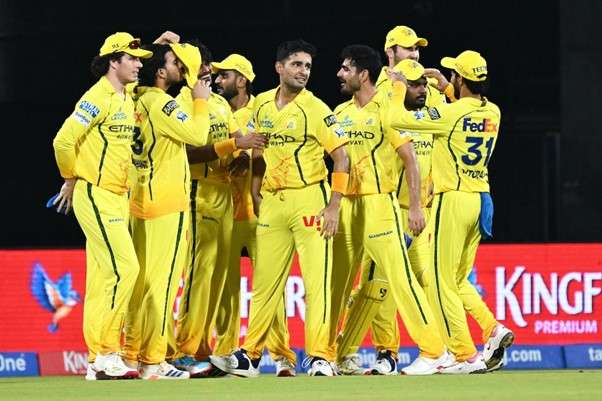
On May 21, 2026, at Narendra Modi Stadium in Ahmedabad, Chennai Super Kings (CSK) suffered an 89-run defeat against the Gujarat Titans, the heaviest loss in the franchise’s IPL history. However, CSK ‘s season did not collapse in Ahmedabad. The warning signs had appeared much earlier. From the opening weeks of IPL 2026, injuries disrupted team plans, selection decisions raised eyebrows, and performances lacked the consistency that had defined the franchise for nearly two decades.
Match after match, CSK struggled to find the balance and clarity that once made them one of the most feared teams in the tournament. By the end of the league stage, the five-time champions had won just six of their fourteen matches, finishing seventh with 12 points and a negative net run rate. For a team synonymous with stability and success, IPL 2026 became a season of uncertainty, frustration, and missed opportunities. CSK finished on 8th position with 12 points from 14 matches.
Injuries Disrupted the Campaign
Chennai Super Kings IPL 2026 season was derailed by a relentless injury crisis that left the team constantly searching for answers. At a time when consistency and stability were repeatedly forced into reshuffling their playing Xl and altering their team combinations. One of the earliest and most significant setbacks came with the loss of Ayush Mhatre.
Ayush Mhatre had emerged as one of the brightest positives of the season, providing explosive starts and injecting much-needed intent into the top order. With a strike rate exceeding 177, Mhatre had become a key component of CSK’s powerplay strategy as he had scored 201 runs in 6 innings & was injured after the SRH clash on 18th April. His severe hamstring injury not only removed a promising performer but also disrupted the team’s batting structure, forcing repeated changes at the top of the order.
The biggest blow, however, arrived when Jamie Overton was ruled out with a thigh injury. The English all-rounder had evolved into one of CSK ‘s most influential players, contributing valuable runs and leading the team’s wicket-taking charts with 14 wickets in 10 matches & 136 runs in 10 matches with a strike rate of 158.14. Overton’s ability to balance both departments made him crucial to the side’s plans, and his absence exposed the lack of depth with both bat and ball, proving impossible.
Australian pacer Nathan Ellis was unavailable for a major part of the season, while Khaleel Ahmed and other bowling options battled fitness issues. MS Dhoni’s injury-related absences deprived the team of valuable experience and leadership during pressure situations, leaving a young side without one of its most trusted decision makers. The injury crisis disrupted CSK’s balance throughout the season, forcing constant changes to their playing XI. Without a settled combination, the team struggled to build momentum and consistency when it mattered most.
Selection Calls Created More Questions than Answers
CSK ‘s auction strategy and team selections remained under scrutiny throughout IPL 2026. The franchise spent 2.84 crore on uncapped players Kartik Sharma (295 runs in 11 matches and struck 2 half-centuries) and Prashant Veer, but neither justified their price tags consistently. While Kartik struggled to handle expectations, Veer was never given a clearly defined role and received limited bowling opportunities.
At the same time, players like Sarfaraz brought intent and energy to the middle order while Mhatre provided aggressive starts before an injury halted his promising campaign. Their inconsistent selection raised further questions about the team’s decision-making. Captain Ruturaj Gaikwad (*337 runs in 14 matches with 2 half-centuries) endured a difficult season with both bat and leadership responsibilities.
Frequent changes to the playing XI, uncertainty around players like Akeal Hosein, and inconsistent performances from key names such as Shivam Dube, Dewald Brevis, and Noor Ahmad prevented CSK from finding a settled combination. Jamie Overton was one of the few bright spots in an otherwise difficult season. However, constant injuries and frequent changes to the playing XI prevented CSK from building momentum and consistency.
CSK Lost Their Identity
Perhaps the most worrying aspect of the season was the loss of the identity that made the Chennai Super Kings successful for so many years. Historically, CSK built squads specifically suited to conditions at Chepauk. Their teams’ combined experience, adaptability, and clearly defined roles.
In 2026, that formula seemed absent. Former Indian spinner Ravichandran Ashwin openly questioned whether the squad was even suited to Chennai’s home conditions. He argued that the team lacked the balance, experience, and variety that once made CSK so difficult to beat. Rather than looking like a well-oiled machine, Chennai often appeared uncertain of its strengths and game plan.
CSK ‘s IPL 2026 downfall was caused by a combination of injuries, selection inconsistencies, and underwhelming performances. More than the results, it exposed a team searching for its identity in a new era.
Also Read: KKR vs DC: 3 Reasons For KKR’s Crushing Loss Against DC