
Test matches in Galle have a habit of stripping away illusions. When Sri Lanka slipped to 90 for 5 in their first innings against India, chasing a mammoth 462, the familiar sense of subcontinental drift felt almost inevitable. By the time Manav Suthar spun India to a 165-run victory on Day 5, the margin looked comfortable enough on the scorecard.
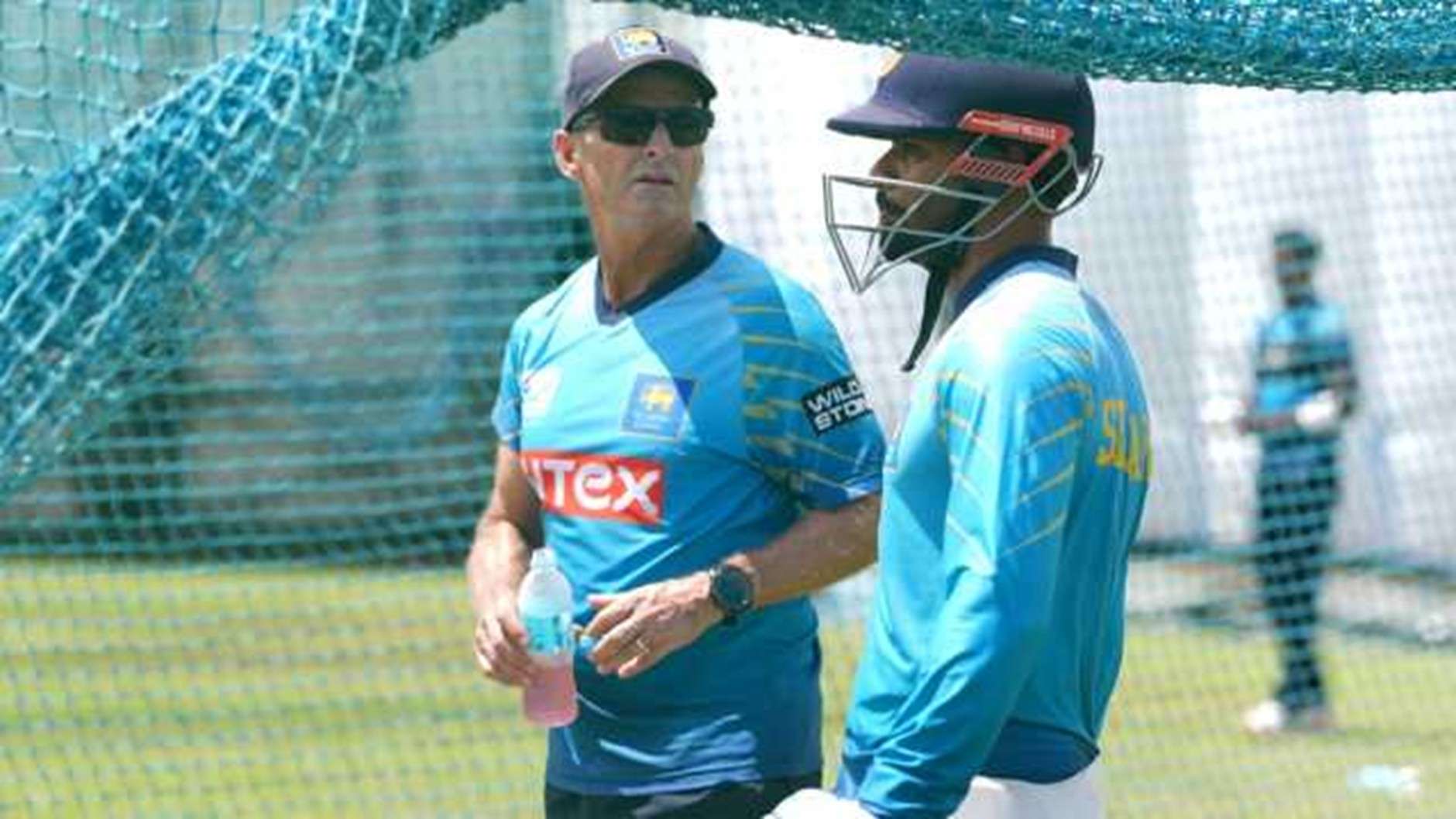
Yet, for head coach Gary Kirsten, the five-day grind told a more layered story than the final result suggested. Taking over a red-ball group that had gone 14 months without a home Test before this week, Kirsten sees early signs of structural spine emerging through the grit of younger names.
We are starting to build some shape into Team- Gary Kirsten
Speaking after the opening Test, Gary Kirsten was candid about the road ahead, acknowledging that while the squad is evolving, finding a coherent Sri Lanka Test team shape is only half the battle:
“It’s sometimes tough when you don’t play much Test cricket to understand how you need to play. This is our third Test in the space of a couple of months, and I can already see the team developing. And we’re starting to build some shape into the team, but we need to turn it into a performance at some point,”
Top-Order Fragility: The Flaw That Cost Sri Lanka Fortress
Sri Lanka’s bowling unit gave Kirsten plenty of reason for optimism on Day 4. Rolling India out for 193 in just 48.5 overs led by Asitha Fernando’s reverse-swing bursts and Prabath Jayasuriya’s control kept the fourth-innings target within theoretical reach. But as Kirsten pointed out, the contest was lost in the first session of each innings.
With senior mainstays Kusal Mendis & Pathum Nissanka unavailable through injury, the makeshift top order folded under the relentless pressure of Mohammed Siraj and Prasidh Krishna.
“Where we probably lost the game was losing wickets up front in both innings. You can’t afford that in Test cricket, especially when the opposition has hit 460-odd. India applied themselves really well in that first innings,”
He added:
“I thought we did a brilliant job with the ball yesterday. We got 10 wickets in just under 50 overs, which is an amazing effort. In fact, if we had taken one or two catches, we might have been chasing early 300s, which might have changed the complexion of the game,”
Sri Lanka’s Galle Resistance vs Deficit
| Phase / Metric | Reality in Galle | Kirsten’s Blueprint |
| Top 4 Contribution | Combined 69 runs across both innings | Demands compact leaves and occupation of the crease against the new ball. |
| Middle-to-Lower Order | 100 & 84 from Sonal Dinusha; 80 & 10 from Dickwella | Solidified lower-middle order stability under extreme scoreboard pressure. |
| Bowling Return | Bowled India out for 193 in 48.5 overs (2nd Innings) | Aiming for 20-wicket consistency using both seam reverse and spin control. |
The Rise of Sonal Dinusha: Kirsten’s Red-Ball Archetype
If there was a blueprint for how Kirsten wants Sri Lanka to approach the format, 24-year-old Sonal Dinusha provided it. Walking in at 90 for 5 in the first innings, the left-hander showed pristine defensive patience, compiling a maiden 100 from 168 balls before backing it up with a gritty 84 in the fourth innings.
Dinusha’s willingness to absorb dot balls and trust his back-foot defence offered a sharp contrast to the loose drives that derailed the top order.
“His love for Test cricket and playing that way is particularly pleasing to me to watch. It creates a great opportunity for young players to come in and stake their claim.”
The Six-Month Test Window: A Rare Opportunity to Build
Sri Lanka’s biggest impediment in recent years hasn’t necessarily been talent, but scheduling. Sporadic two-match series scattered across the calendar have made building red-ball rhythm nearly impossible.
With six Tests lined up over the next half-year including the upcoming Colombo clash, tours to Pakistan and New Zealand, and a home series against South Africa Kirsten believes the sheer volume of cricket will accelerate their learning curve.
“I think the challenge for the modern players, especially in Sri Lanka, is that you don’t play much Test cricket. At least now we’ve got another six to go within the next six months or so, so it’s great to get into the Test match game a little bit and then to understand how to score runs and bat for long periods of time and have an influence on a game over a long period of time,”
“You need to be able to get 20 wickets consistently, bowl teams out with your seam, and be able to bowl teams out with spin as well. It’s really important that we develop that Test match squad,”
Turning Resilience into Results
Galle was a harsh lesson in the ruthless standards required to beat high-calibre opposition, but it was not a step backwards. Stretching a match to the afternoon of Day 5 after being 99 for 5 on Day 3 shows a team fighting for its identity.
As Gary Kirsten works on moulding this Sri Lanka Test team shape, the pieces are slowly aligning. If the top order can borrow Dinusha’s discipline and give the bowling attack runs to defend at the SSC in Colombo, the gap between promising passages of play and winning Test matches will close faster than expected.
Also Read: SL vs IND: Manav Suthar Bamboozles Sri Lanka