
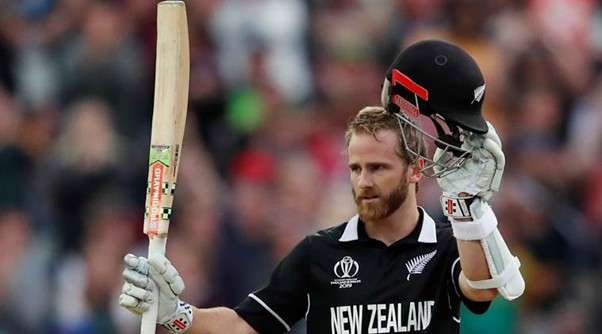
There is a complete class in the way Kane Williamson plays cricket. In a format that increasingly belongs to clearing the front leg, manufactured scoops, and breakneck power, Kane Williamson remains a beautifully preserved purist. He doesn’t attack blindly; he gently dismantles it. His game is built on late cuts played from right under his nose, soft hands that drop the ball into spaces vacant of fielders, and a heartbeat that never seems to rise above a resting state.
Kane Williamson’s Test record commands global respect, but his mastery of the 50-over format is a masterclass in risk appraisal. He redefined the modern number three anchor turning what could be a static role into a masterclass in momentum control. When you look back at his finest One Day International performances, three specific centuries explain his evolution from a technically gifted prodigy into one of the coldest clutch players the game has seen.
1. 148 vs West Indies (2019 World Cup) – A Captain’s Masterclass
-
-
Venue: Old Trafford, Manchester
-
Date: June 22, 2019
-
| Metric | Details |
| Match / Innings |
148 vs West Indies Old Trafford, Manchester (June 22, 2019) |
| Score | 148 runs off 154 balls (14 fours, 1 six) |
| Context | New Zealand were reeling at 7/2 after the first 10 balls of the match, facing a fiery, swinging new-ball spell from Sheldon Cottrell. |
| Result | New Zealand won by 5 runs |
The Context
Context dictates the greatness of any innings, and the scenario Kane Williamson walked into at Manchester was an absolute house on fire. Sheldon Cottrell had just produced a double-wicket maiden in the opening over of the match, trapping Martin Guptill leg-before with a swinging yorker and cleaning up Colin Munro two balls later. At 7 for 2, with the ball shape-shifting under heavy gray skies, the West Indian pacers were bowling with venom.
Tactical Execution
What followed was a textbook exercise in counter-pressure. Williamson, alongside his long-time ally Ross Taylor, did not try to hit his way out of trouble. Instead, they slowly deflated the West Indian bowling unit. Williamson played incredibly late, deliberately absorbing a barrage of short stuff from Oshane Thomas and Kemar Roach by riding the bounce and playing the ball directly into the turf.
Once the initial lateral movement subsided, Williamson began to showcase his elite game awareness. Recognizing that the West Indies were relying on an aging Chris Gayle and an expensive Ashley Nurse to roll through the middle overs, he expanded his scoring zone. He rotated the strike with consistency, turning safe good-length balls into easy singles to long-on and long-off. His acceleration from 50 to 100 was seamless; his career-best 148 was eventually ended by a tired pull shot late in the innings, but it dragged New Zealand to a competitive 291. It was an iconic display of defensive responsibility and tactical tempo that set up Carlos Brathwaite’s legendary near-miss later that evening.
2. 106* vs South Africa (2019 World Cup) – Ice-Cool Under Pressure
-
-
Venue: Edgbaston, Birmingham
-
Date: June 19, 2019
-
| Metric | Details |
| Match / Innings |
106* vs South Africa Edgbaston, Birmingham (June 19, 2019) |
| Score | 106* runs off 138 balls (9 fours, 1 six) |
| Context | Chasing 242 on a sticky, slow, two-paced surface that offered plenty of holding turn for the spinners and uneven bounce for the seamers. |
| Result | New Zealand won by 4 wickets (with 3 balls to spare) |
The Context
Three days before his Old Trafford masterclass, Williamson played an innings that lacked the fluid scoring of his 148 but surpassed it in pure psychological burden. On a sticky, slow Edgbaston pitch that was holding tenaciously, South Africa managed a competitive 241 in a rain-truncated 49-over game. New Zealand’s top order stalled completely against Chris Morris and Kagiso Rabada, collapsing to a precarious 80 for 4.
Tactical Execution
On a pitch where every other specialist batter looked visibly out of sync, Kane Williamson looked like he was operating in a different time zone. He realized early on that trying to force the pace across the line was a recipe for a soft dismissal. Instead, he locked himself into a defensive shell, using a perfectly vertical bat to counter Imran Tahir’s subtle variations.
The true genius of this knock was how he managed the back-end calculations alongside Colin de Grandhomme. With the asking rate creeping over six and a half runs an over on a surface where boundaries were a rarity, Williamson never panicked. He trusted his ability to manipulate fields, running hard twos to deep mid-wicket and square leg to keep the target within touching distance.
The final over from Andile Phehlukwayo will forever sit in New Zealand cricket folklore. Needing eight runs, Williamson anticipated a slower ball outside off-stump, dropped his back leg, and launched a massive six over wide long-on to bring up one of his greatest centuries. An ice-cool guide through short third-man for four on the next ball finished the game, illustrating how a chase can be executed through composure rather than brute force.
3. 118 vs India (2014) – The Rise of a Modern Great
-
-
Venue: Seddon Park, Hamilton
-
Date: January 28, 2014
-
| Metric | Details |
| Match / Innings |
118 vs India Seddon Park, Hamilton (January 28, 2014) |
| Score | 118 runs off 122 balls (10 fours, 2 sixes) |
| Context | Setting a target in the first innings against a star-studded, peak Indian batting lineup during a crucial home bilateral series. |
| Result | New Zealand won by 7 wickets (DLS Method) |
The Context
While his 2019 World Cup exploits established his legend, his 118 against India in early 2014 was the definitive announcement of his arrival as an elite ODI batsman. India had brought a powerhouse squad to New Zealand, and the Black Caps were hunting for a historic bilateral series victory. Batting first at Hamilton, New Zealand desperately needed a substantial structural foundation to post a total capable of containing a top-heavy Indian batting unit.
Tactical Execution
A 23-year-old Williamson showed tactical and technical maturity far beyond his years. Facing an attack that featured the pace of Mohammed Shami and the cerebral variations of Ravichandran Ashwin, he put on a clinic in footwork.
Rather than allowing Ashwin to tie him down from around the wicket, Kane Williamson repeatedly used his feet to press forward, turning potential turning deliveries into harmless singles down the ground. His handling of the short ball from Shami was similarly pristine he rolled his wrists over the ball down into the leg-side to minimize any catching risk.
Kane Williamson’s 118 off 122 balls featured 10 crisp boundaries and a pair of cleanly struck straight sixes, providing the ideal platform for Ross Taylor to explode later in the innings. It wasn’t just a match-winning contribution; it was the blueprint for how Williamson would go on to anchor the national side for the next ten years.
The Legacy of Kane Williamson’s Best ODI Knocks
When you review Kane Williamson’s best ODI knocks, a clear pattern emerges. He has never been a batsman who dominates when the conditions are a batting paradise and the bowling is listless. His finest works have always been chiseled out in the dirt when the surface is two-paced, the top order has tumbled, and the pressure of a major tournament is at its absolute maximum.
Through unmatched situational awareness, technical perfection, and a unique ability to play the ball incredibly late, Kane Williamson proved that the classical anchor still has a vital place in modern white-ball cricket. Long after he steps away from the game, these three innings will remain the definitive text for any young batsman trying to master the art of building a one-day innings.
Also Read: ENG vs NZ: A Tribute To Kane Williamson