
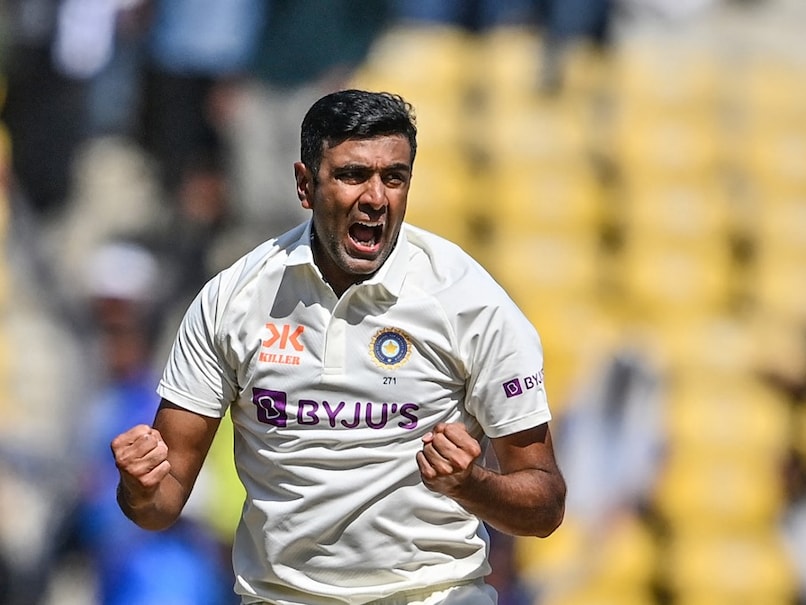
Veteran Indian cricketer Ravichandran Ashwin has raised concerns over India’s playing XI in the first test at Leeds. Before the match started,England have already announced their playing XI for the first Test against India but fans were still curious to know how Shubman Gill-led side’s final eleven will shape up. However, spin legend Ravichandran Ashwin has gave an idea how India’s playing XI will shape up for the series opener which resumed from June 20 at Headingley in Leeds.
In a recent prediction, veteran Indian spinner R Ashwin had revealed his preferred Indian playing eleven for the first Test of the five-match series against England. The series marks the beginning of India’s campaign in the World Test Championship (WTC) 2025-27 cycle.However things didnt fell in place for the Indian team and despite being in dominant position for majority part of the match, India lost the plot to England who went up to win a historic match in the chase.
Reasons for India’s 5-wicket defeat to England at Leed’s
Not all fresh starts make for fairy tales, and for Shubman Gill’s first outing as India’s Test captain, that truth came down hard under the grey skies of Leeds. Despite centuries from four different batters and two separate innings of promise, India surrendered their advantage on multiple occasions, eventually going down to England by five wickets in the first Test of the five-match series. It was a game that had moments to remember for India, but also glaring flaws that cost them dearly.
The signs of a transition in Indian Test cricket were visible (no Rohit Sharma, no Virat Kohli), and Gill at the helm of a young side eager to make their mark. Yet, in a match that should have tilted heavily in India’s favour after a first-innings score of 471, the team stumbled through repeated collapses, dropped catches, and a lack of bite with the ball in the final innings. As England chased down a mammoth 371 in the fourth innings, India were left asking. Major reasons for India’s downfall are as follows :
Twin batting collapses despite strong starts
India were in cruise control on both occasions with the bat. In the first innings, they were 430/3 at one stage with Yashasvi Jaiswal, Rishabh Pant, and Shubman Gill having done the heavy lifting. But from there, a collapse saw them lose their final seven wickets for just 41 runs. What looked like a potential 600-run total ended at 471.
The story wasn’t much different in the second innings. Yet again, Rishabh Pant and KL Rahul had the visitors flying high at 333/5, but the middle and lower order couldn’t consolidate the advantage. India collapsed again, adding only 77 runs more to finish at 364. Sai Sudharsan, making his debut, and Karun Nair, returning after a long hiatus, both failed to make their opportunities count. The imbalance between the top and middle orders proved costly.
Fielding mishaps at critical junctures
India’s fielding was subpar across both innings, and no one had a tougher outing than Yashasvi Jaiswal. The young opener dropped four catches in the match, including a crucial one when Ben Duckett was on 98. Duckett went on to score a match-defining 149, and India’s shoulders visibly dropped with every missed opportunity.
But it wasn’t just Jaiswal. The slips dropped chances, outfielders misjudged the ball, and wicketkeeper Rishabh Pant too looked off-colour behind the stumps at key moments. In a tight Test match on a fifth-day pitch, where moments often make the difference, India gave England too many lifelines.
Misfired bowling combination
With the ball, India’s chosen unit (Bumrah, Siraj, Shardul Thakur, Prasidh Krishna, and Jadeja) struggled to impose themselves when it mattered most. The balance was off. While Bumrah delivered a five-wicket haul in the first innings, he went wicketless in the second. Siraj too couldn’t make an impact.
The exclusion of an extra pace option like Arshdeep Singh or a more attacking wrist-spinner left the attack feeling flat. Shardul’s inclusion for his batting did yield some benefits in the second innings, but his bowling lacked venom, which has now brought about a big question mark on his inclusion. Prasidh looked rusty, and Jadeja, despite picking up Stokes, lacked the bite to control or threaten consistently.
Over-reliance on Jasprit Bumrah
For a while, it looked like Jasprit Bumrah would do it all on his own. His 5/83 in the first innings was vintage Bumrah: reverse swing, hostile pace, and clinical accuracy. But in the second innings, when India desperately needed breakthroughs, even he couldn’t penetrate a determined England top order.
Once Bumrah was handled with ease (especially by Duckett and Zak Crawley), India’s bowling began to unravel. It exposed just how dependent this attack still is on their talisman. When Bumrah clicks, India are in the game. When he doesn’t, things fall apart far too quickly.
England just played better, smarter cricket
While India had their moments, England never lost the belief. Their approach was calm, calculated, and fearless. They weren’t rash, but they weren’t overly cautious either. Duckett’s 149 and Crawley’s redemption knock of 65 after a failure in the first innings laid the foundation.
In the first innings, they matched India’s 471 with 465 of their own, thanks to a hundred from Ollie Pope and one nearly from Harry Brook. On Day 5, chasing 371, England batted with remarkable discipline in the morning session, absorbing pressure, and then picked up the pace when needed. Their understanding of when to attack and when to consolidate proved too good for India’s attack.
Citing the above reasons it was evident that India at the position of domination faltered at crucial junctures to gift away an easy game to India. Former Indian spinner R Ashwin reckoned that selection blunder’s in the first test cost India the match dearly.
Ravichandran Ashwin highlights India’s selection blunders a major reason after losing the 1st Test
Ravichandran Ashwin believes India got their combination wrong in the recently concluded Test series opener against England at Headingley, Leeds. The visitors suffered a five-wicket defeat, failing to defend a mammoth 371-run target in the fourth innings. He opined that India didn’t need a fourth seamer in the playing XI, as Shardul Thakur was used sparingly by skipper Shubman Gill. The right-arm pacer bowled just 16 overs across two innings.
Suggesting that India could have played an extra spinner in place of Shardul, here’s what R Ashwin said in the latest YouTube video of his channel :
“There is a big chance for Kuldeep to be played in the XI. I simply adore Shardul Thakur, but if he is not going to bowl at all till the 40th over in the 1st innings, and used sparingly in the Test… it means there was no need for the fourth fast bowler, and you could have instead played a second spinner.”
Explaining why playing Kuldeep at Headingley would have been a better option, the legendary spinner R Ashwin added :
“Honestly, there were a lot of chances for Kuldeep to have played this Test. We have seen high-scoring chases at Leeds. Say, for instance, today, Crawley and Duckett had a 150-run opening partnership.
If Kuldeep had a bowl at them… of course, I am not saying he would have returned with a fifer. If he had ended up with 3/80, and Jadeja picked up 2/70, the game was over. If England was at 80/1, and if we could have gotten a couple more breakthroughs, the game would have been over.”
Shardul Thakur remained wicketless in England’s first innings and claimed two scalps in the run chase. The bowling all-rounder failed to deliver a significant impact with the bat, registering scores of 1 and 4. R Ashwin opined that making Nitish Kumar Reddy bat in the top six on the England tour would not be the right call. R Ashwin pointed out that the youngster usually batted at No. 5 or No. 6 during the Border-Gavaskar Trophy series against Australia.
It is worth mentioning that Nitish was not part of India’s playing XI for the Test series opener against England. The 38-year-old R Ashwin remarked in the video :
“Nitish had a good run in Australia and a somewhat okayish IPL. Also, he only played the role of Shardul, the bowler, and didn’t bat in the top 6. He batted down the order. Would you play him directly in England as a Top 6 batter? I am not for it.”
Nitish Kumar Reddy did a commendable job in the Border-Gavaskar Trophy, which was also his debut Test series. He was India’s second-highest run-getter in the five-match series, amassing 298 runs across nine innings at an average of 37.25. He also picked up five wickets with the ball.
India’s Headingley heartbreak wasn’t a catastrophe, it was a missed opportunity. Shubman Gill’s young team showed promise, especially with the bat at the top of the order, but also showcased areas that need immediate attention. Whether it’s plugging the middle-order gaps, tightening fielding standards, or reducing dependency on a single bowler, this loss can serve as the blueprint for growth.
Shubman Gill spoke candidly about the team’s shortcomings after the game and reaffirmed the belief in this young side. The road to redemption runs through Birmingham now, and India will hope that the second Test sees a more complete, composed performance. Having lost the Leeds Test from a strong position, Team India will need to lift themselves quickly. The second Test of the five-match series begins at Edgbaston in Birmingham from July 2.
Also Read: ENG vs IND : Shubman Gill Appointed Test Skipper For Red Ball