
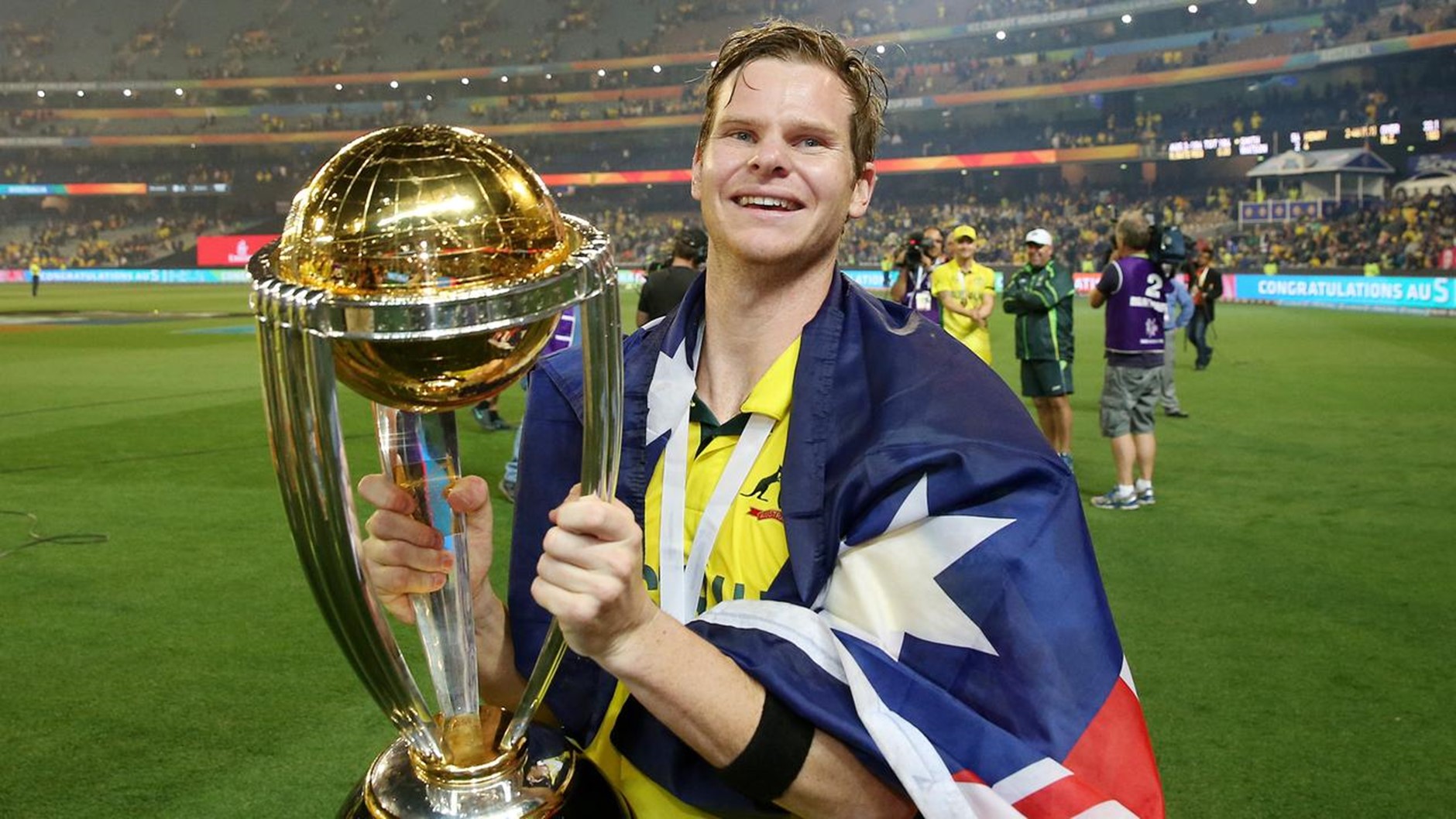
One of the greatest cricketers of his generation, Australia batter Steve Smith has announced retirement from ODI cricket after the team’s elimination from ICC Champions Trophy on Tuesday. Steve Smith was named the captain of the national team for the tournament after primary skipper Pat Cummins was ruled out due to an injury. Steve Smith led his troops all the way to the semi-final of the tournament before his team was eliminated by Rohit Sharma-led India.
Australia’s star batter Steve Smith has announced his retirement from One-Day Internationals. The middle-order batter’s final appearance in ODIs came in the Champions Trophy semifinal against India in Dubai in which he top-scored for Australia with 73 in a losing cause.
Steve Smith’s Glorious ODI International career a glimpse
The 35-year-old batter Steve Smith featured in 170 ODIs, scoring 5800 runs at an average of 43.28 and a strike rate of 86.96, including 12 centuries and 35 half-centuries. Steve Smith finished his career as the 12th highest run-getter for Australia in ODIs. He registered his highest score of 164 against New Zealand in 2016. Having made his debut as a legspinning allrounder, he also picked 28 wickets and took 90 catches.
It is appropriate, whether by design or otherwise, that Steve Smith has bowed out of ODI cricket while still being committed to playing Tests. It allows people to both notice and appreciate how good his one-day career was, given his 50-over record lives in the shadows of one of the most extraordinary Test careers of the modern age. He was pivotal to two World Cup wins. He was twice Australia’s ODI player of the year. His standing among Australia’s best in the format is undersold.
Smith retires from ODIs as one of Australia’s best-ever batters in the format despite being 12th on the all-time run-scorers’ list for Australia. Only five players have scored more than his 12 ODI centuries and only David Warner has a better average among those five.
His ODI career was only one year shorter in length than Ricky Ponting’s, yet he played 204 fewer ODIs, which speaks to the proliferation of T20I cricket post 2010 at the expense of the 50-over game and the format’s lesser relevance outside of global events. Purely by average, Smith ranks as Australia’s greatest ODI No. 3. He is also in fine company globally among just six men to average more than 50 at No. 3 in ODI cricket, alongside Virat Kohli, Babar Azam, Viv Richards, Faf du Plessis and Kane Williamson.
In that semi-final innings of 2015 World Cup vs India, he dragged Aaron Finch along in a 182-run stand, of which Smith scored 105, as Finch crawled at a strike rate of just 69.82. Australia posted 328 for 7, which proved 95 too many. Smith’s record in ODI World Cup knockout matches is unrivalled. That golden three-match run in 2015 finished with him hitting the winning runs at the MCG.
Smith was an integral part of two ODI World Cup victories in 2015 and 2023. In 2015, he made five consecutive fifty-plus scores including 105 in the semi-final win over India and 56 not out in the final against New Zealand at the MCG, where he also hit the winning runs. He was named in the ICC men’s ODI team of the year in 2015 and was Australia’s ODI player of the year in 2014-15 and 2020-21, the last a year in which he plundered three centuries including back-to-back 62-ball masterclasses at the SCG against India in the space of three days.
His last three ODI hundreds also showcased his extraordinary range. He plundered back-to-back centuries off 62 balls against India in 2020. In 2022, on an incredibly tricky pitch in Cairns, he made 105 off 131 to help Australia defeat New Zealand in a game where no other player passed 52.
All this from a player who was initially selected as a legspinning allrounder and did not bat in 11 of his first 36 ODIs before his first innings at No. 3. He only bowled 11 times in his last 134 matches thereafter.
As captain, his tactical nous was often on display, right up to his final match as he tried to marshal an inexperienced attack against India’s batting behemoths, but a defining moment eluded him. Steve Smith led Australia in 64 ODIs from 2015 to 2025. Only Ponting, Allan Border, Steve Waugh, Mark Taylor and Michael Clarke have done so on more occasions. All five of those captained Australia to a World Cup final and four secured seven titles between them. Smith was the only one to not lead his country in a World Cup
Steve Smith retires from ODI cricket, remains committed to Tests after Champions Trophy 2025
Steve Smith has retired from ODI cricket effective immediately following Australia’s semi-final loss at the Champions Trophy. He will continue to be available for Tests and T20Is.
Steve Smith, 35, informed his team-mates immediately after the loss to India in Dubai on Tuesday that he had played his last ODI match, meaning he will not be part of Australia’s team for the 2027 ODI World Cup despite standing in as captain for the Champions Trophy in Pat Cummins’ absence.
Steve Smith, who retires as one of the most prolific cricketers for Australia in the format, featured in a whopping 170 ODIs for the team, scoring 572 runs with 12 centuries while also winning the World Cup twice. However, the announcement means that Smith will not be a part of the Australian team in the 2027 ODI World Cup.
“It has been a great ride and I have loved every minute of it,” Smith said in a statement.
“There have been so many amazing times and wonderful memories. Winning two World Cups was a great highlight along with the many fantastic team-mates who shared the journey.
He is not currently in Australia’s T20I plans after being left out of the 2024 T20 World Cup squad, but has stated that he would like to represent Australia at the 2028 Olympic Games in T20 cricket and remains available for selection if called upon.
Steve Smith was part of Australia’s ODI World Cup-winning squad in 2015 and 2023, and he took over the captaincy of the 50-over side following the retirement of Michael Clarke. He led Australia in 64 matches, winning 32 and losing 28, with four no results. He took over the captaincy on an interim basis for the Champions Trophy, filling in for Pat Cummins, who was out injured.
Speaking about Smith’s decision, George Bailey, the chair of men’s selectors, said:
“We fully understand and support Steve’s decision to retire from One Day International cricket. Steve has said on many occasions he is approaching the remainder of his playing career on a series-by-series basis, a position which hasn’t changed and one Cricket Australia supports.
“His record as a batter across 167 games is exemplary and to leave the format as a two-time World Cup winner cements his legacy as one of the great Australian ODI players. From an NSP standpoint, Steve remains fully committed to Test cricket and is an integral member of and leader within that team.”
Australia’s next ODIs are scheduled to be a series against South Africa in August. Smith has committed to play for Welsh Fire in the Hundred at the same time, and his 50-over retirement should enable him to play more franchise cricket as he approaches the end of his career.
The task of replacing him in the ODI side is hard enough without contemplating the cavernous hole he will leave in the Test side. Australia haven’t been able to replace Warner adequately yet in any format. It took two years for Steve Smith to emerge as Ponting’s heir at No. 3 in ODI cricket. Australia only have two years to complete another such search before the next World Cup.
Steve Smith was Australia’s ODI Swiss Army knife. Reliable and adaptable. They never went anywhere or succeeded in anything without him. He might never have a 50-over trophy named after him, but it will be very difficult for Australia to win their next one without him.