
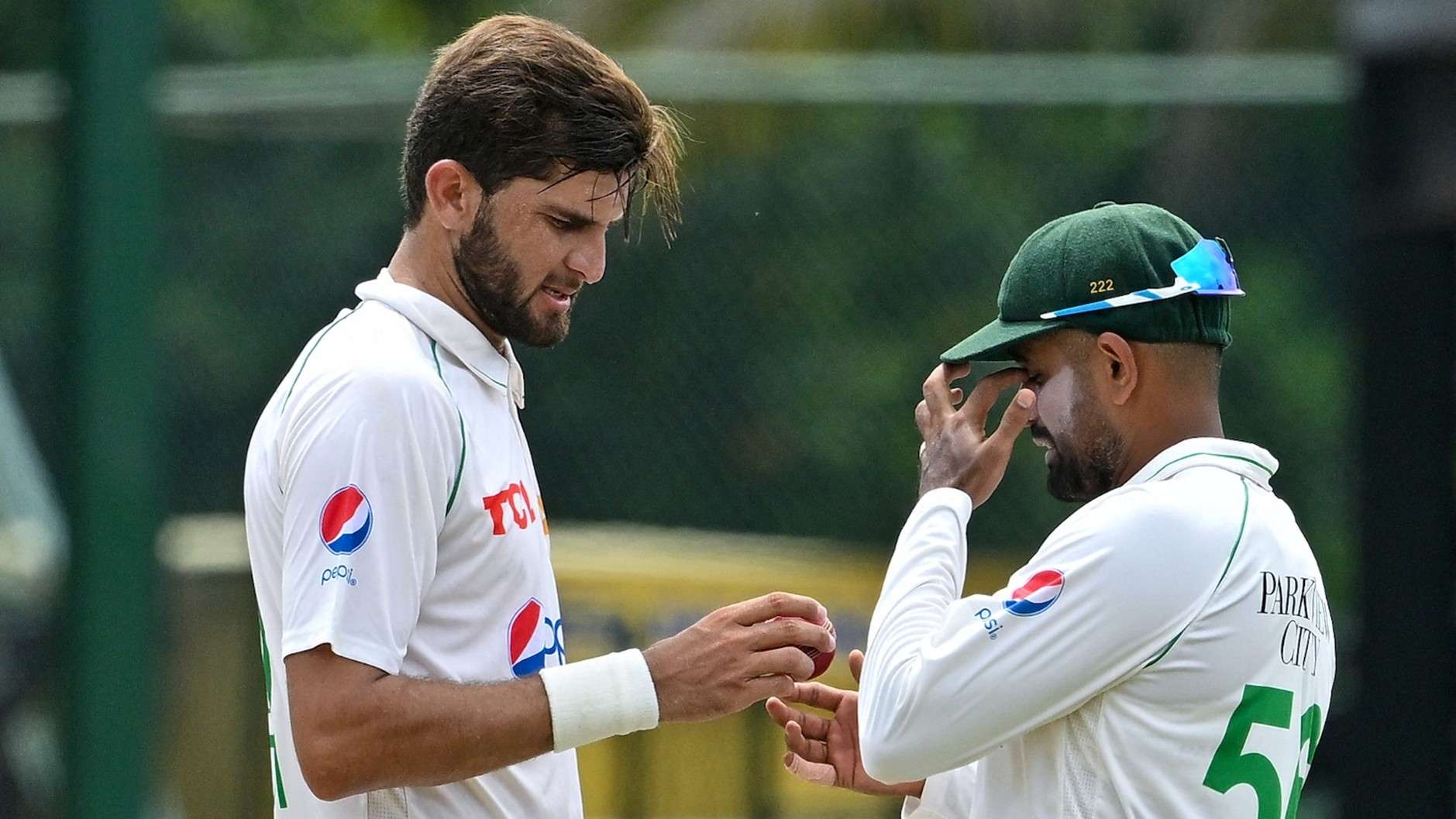
Pakistan cricket has once again found itself at the centre of unnecessary attention. Basit Ali made a big claim about the reported rift between Babar Azam and Shaheen Shah Afridi. According to Basit Ali, the disagreement between the two senior players over captaincy has had a serious impact on the national team and could be one of the reasons behind Pakistan’s recent downfall against England.
The controversy has emerged at a difficult time for Pakistan, who are under pressure after losing the first two Tests of their three-match series against England. The team’s performances have raised questions over leadership, selection and consistency, while Babar Azam has also been criticised for his recent form with the bat. Pakistan have thoroughly been beaten in 2 Test matches with last Test match commencing on 9th September at Birmingham.
Basit Ali’s Big Statement on Babar Azam and Shaheen Afridi
Basit Ali believes Pakistan’s problems cannot simply be blamed on poor performances on the field. He pointed towards the reported differences between Babar Azam and Shaheen Afridi, particularly around the captaincy, as a major turning point for Pakistan cricket.
Speaking on the Game Plan show, Basit questioned Babar’s leadership ability and said that several decisions made during his captaincy were not strong enough. He also suggested that the fallout between Babar and Shaheen had wider consequences for the national side.
” Babar Azam is not a strong captain. I am not speaking about this based on the performance in England. He has made many wrong decisions. The main reason for Pakistan cricket’s downfall is the rift between Shaheen and Babar. When there was falling-out between the two over the captaincy, Pakistan cricket was ruined that day.”said Basit Ali.
Basit also stressed that both players are quality cricketers and suggested that the problem was not about individual abilities but the divisions that followed the leadership changes.
” Many statement were made, saying Shaheen is a vey good bowler and Babar is a very good batter. the rift, whoever created that, the side effects can be seen now,” he added .
Pakistan’s Leadership Changes Continue to Raise Questions
Leadership instability has been a recurring issue for Pakistan cricket over the past few years. Babar Azam stepped down as Pakistan’s captain after the 2023 ODI World Cup, after which Shaheen Afridi was handed the T20I captaincy. However, Shaheen Afridi’s captaincy spell did not last long, and Babar eventually returned to the leadership setup for T20 WC 2024. Even Shaheen Afridi is the current ODI captain since October 2025, as we can say PCB is showing immense faith in him.

The constant changes have made it difficult for Pakistan to establish stability across formats. At present, Babar leads Pakistan in Tests, Shaheen captains the ODI side and Salman Ali Agha is the T20I captain, meaning Pakistan have three different leaders across the three formats.
Babar was appointed Pakistan’s Test captain earlier this year after taking over from Shan Masood. Under his captaincy, Pakistan drew their two-match Test series against the West Indies, but his individual form remains a concern. The right-hander has now gone four years without scoring a Test century, adding further pressure on one of Pakistan’s most experienced batters. His two single-digit scores at Lord’s have also increased scrutiny around his current form.
PCB Takes Action as Pakistan Struggle in England
The Pakistan Cricket Board has also made significant changes during the ongoing England tour. After Pakistan struggled in the opening two Tests, the PCB decided to send seven players back home, including Mohammad Rizwan and Salman Ali Agha.
The changes were not limited to the playing group, as Test coach Sarfaraz Ahmed and bowling coach Umar Gul were also not spared. White-ball coach Mike Hesson will now take charge of the team for the third and final Test against England in Birmingham.
Shaheen Afridi, meanwhile, is not part of Pakistan’s current red-ball plans, while Babar Azam continues to lead the Test side. Pakistan now face a crucial period where consistency and unity will be just as important as performances on the field. The reported Babar Azam-Shaheen Afridi rift, combined with repeated captaincy changes and coaching reshuffles, has highlighted the need for a clearer long-term plan.
For Pakistan to regain its position as a competitive international side, the focus will have to move beyond individual controversies. Stable leadership, better decision-making and a united dressing room could be key to rebuilding Pakistan cricket.
Also Read: ENG vs PAK: Rashid Latif Questions Babar Azam’s Leadership